
 ®
®
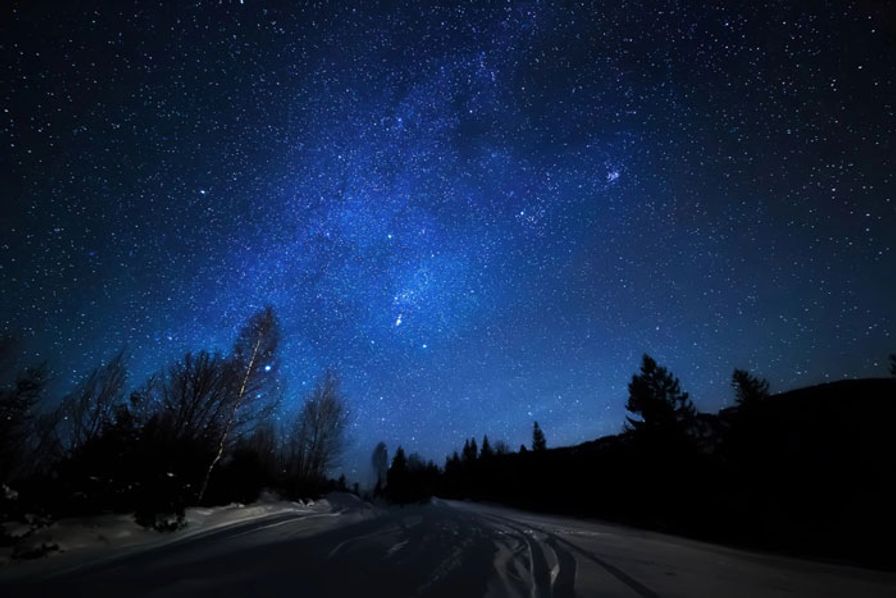
Looking up at the night sky is one of the oldest human experiences, a direct encounter with something no person, corporation, or government created. We have always assumed that the darkness above us belonged to everyone and no one. That assumption may no longer be safe.
Nor is it safe to assume that the satellites that are soon to encircle the Earth will not negatively impact our health.
Late Stage Capitalism Discovers The Sun
Reflect Orbital’s business plan has all the makings of a B-list science fiction movie: build a fleet of giant orbital mirrors, launch them into space, and turn reflected sunlight into an on-demand, for-profit commodity. The startup describes their “sunlight on demand” service as precise, localized, configurable, and dimmable, with lighting that can be adjusted from “noon light to moon light.” In practical terms, Reflect Orbital says its technology would allow users to order sunlight through an app, illuminating areas up to 3 miles wide with intensities between 0.8 and 2.3 lux, several times brighter than a typical full moon.
But the deeper story here is not about one startup. It is about a much larger question that feels alarmingly unresolved in an age of atmospheric manipulation and the extensive commodification of nature itself: When did the sky become a commercial asset?
Mirrors in Space, Objections on Earth
Reflect Orbital’s technology remains in the demonstration phase and is not yet operating commercially or deployed at scale, though the startup has publicly announced at least $26.5 million in venture funding. The company says it plans to launch two demonstration satellites in 2026, beginning with Eärendil-1, a satellite equipped with an 18-by-18-meter reflector designed to test whether sunlight can be redirected from low Earth orbit onto a targeted area below. Its original FCC application summary listed its environmental impact simply as “None,” a classification critics argue is wildly inadequate for a constellation of satellites designed to illuminate Earth from orbit.
And Eärendil-1 is no longer merely a proposal. On July 9, 2026, the FCC authorized Reflect Orbital to deploy and operate the demonstration satellite, allowing the first real-world test of its orbital illumination technology to move forward. The approval applies only to this single satellite, not the company’s envisioned commercial constellation.
The decision came despite substantial public opposition. More than 12,200 people from over 100 countries signed a DarkSky International open letter opposing the proposal, while more than 1,800 formal comments were submitted to the FCC. The American Astronomical Society also filed a petition asking the agency to deny the application, and scientific, environmental, public-health, and dark-sky organizations raised concerns about astronomy, wildlife, circadian rhythms, public safety, and the broader nighttime environment.
Most troublingly, the FCC declined to require a formal environmental assessment. The agency said its authorization concerned the satellite’s use of radio frequencies and concluded that the effects of the solar reflector itself were beyond its regulatory authority. It also determined that opponents had not demonstrated with enough specificity that one demonstration satellite would cause significant environmental harm and declined to consider Eärendil-1 as a precursor to, or cumulative part of, a future constellation.
Reflect Orbital argued throughout the proceedings that its application concerned only one experimental satellite and that many objections were directed at a much larger system the company had not yet asked the FCC to approve. Yet that narrow framing exposes the central problem: every large-scale system begins with a prototype. By evaluating each initial step in isolation, regulators can authorize the experiment that makes future expansion possible without fully examining the system it is intended to create.
The intent is not to cast Reflect Orbital as a uniquely nefarious corporate actor, but to highlight the dangerous precedent this could set and the need for foresight and public consent before private companies begin altering shared natural systems. If a company wanted to install a massive lighting system on Earth that would illuminate miles of habitat at night, communities would expect some meaningful process of consent, including public hearings, environmental review, safety analysis, and enforceable limits. Moving the light source into orbit should not exempt an entity from its obligation to address these concerns.
The Audacity of Nightfall
While Reflect Orbital is not proposing to dim the planet or alter the global climate, it is effectively making a commodity out of light pollution and turning the dark half of the day into the next frontier of capital extraction. The company has catchy marketing slogans like, “Imagine the endless possibilities when sunlight is not limited by geography or time of day.” Pay close attention to the wording there: night is not a necessary part of life on Earth, but a “limitation” on human productivity.
This follows a familiar pattern in our society, where the natural world is repeatedly carved up, packaged as assets, and sold back to us. Land becomes property. Water becomes a product. Attention becomes data. Airspace becomes a market. Emissions become a credit system. Darkness becomes an inefficiency, and the sky itself becomes a mere backdrop for human ambition.
But darkness is not an empty space waiting to be optimized. It is a necessary ecological and biological condition for people, plants, and animals alike. Without it, the rhythms that organize life on Earth begin to unravel: human circadian rhythms are thrown off. Animal and insect migration, feeding, reproduction, and navigation fall apart. Plants lose the light/dark cues that guide growth, flowering, dormancy, and survival. These dangers are not theoretical. A 2017 Nature study found that nighttime illumination reduced nocturnal pollinator visits by 62 percent and lowered fruit production in the studied plant community, showing that even localized light at night can ripple through ecological systems. At scale, that kind of disruption could lead to weaker food supplies, reduced habitat stability, and greater pressure on ecosystems already stressed by development, climate instability, and chemical pollution.
The Body Knows When It Is Night
Artificial light at night is not merely a visibility issue. Light helps regulate the body’s internal clock, influencing sleep, hormone release, metabolism, and other essential biological functions. Exposure at the wrong time can suppress melatonin, delay sleep, and disrupt circadian rhythms.
In a controlled 2022 study, just one night of moderate room light during sleep increased participants’ heart rates and insulin resistance the following morning. Eärendil-1’s expected test illumination is much dimmer, so the findings cannot predict the effects of an orbital pass. They do show, however, that nighttime light can produce measurable physiological changes and should not automatically be treated as harmless.
Long-term studies have also linked artificial light at night with sleep disruption and elevated risks of metabolic and cardiovascular disease, depression, obesity, diabetes, and some cancers, although much of the research is observational. A federal National Toxicology Program review concluded with moderate confidence that certain lighting conditions that disrupt circadian rhythms are causally related to human cancer.
None of this proves that Reflect Orbital’s satellite will make people sick, but it does establish that redirecting sunlight into the nighttime environment raises legitimate public health questions. Before orbital illumination is approved or expanded, independent researchers should evaluate its brightness, spectrum, frequency, ability to enter homes, and cumulative effects alongside existing light pollution.
Practical Solutions vs. Spectacular Solutions
Once Earth’s systems become something to engineer, manipulate, and monetize, at what point does the public get a say?
The natural systems we all depend on are not a corporate resource pool. And yet, again and again, private industries are allowed to reshape these systems in the name of innovation. No corporation should be able to unilaterally alter the sky, drain the water, occupy the land, burden the grid, or disrupt the natural rhythms that communities, ecosystems, and bodies rely on. These decisions should not be made by investors, founders, military contractors, or agencies insulated from public consent.
Reflect Orbital’s own marketing demonstrates how easily this technology can be sold by wrapping it in the language of public safety and the greater good. The language moves from rescue to revenue almost without pause: search-and-rescue missions, safer streets, accelerated construction schedules, longer work shifts, and 24-hour productivity sold as progress.
A search-and-rescue team quickly locating a missing person is an emergency scenario that most reasonable people would support. But that is not the same thing as normalizing something entirely unnatural, like the elimination of darkness, to create additional working hours and increase industrial expansion. Even in agriculture, techniques that are used inside of a greenhouse to increase plant productivity are not the same as imposing extended daylight onto open ecosystems. Outside environments, plants, pollinators, wildlife, and seasonal rhythms cannot be managed like crops under glass.
A sustainable future would not begin by asking how to keep consumption expanding at any cost. It would ask which problems actually require new technology, and which ones were created by industries that profit from endless demand. It would prioritize reducing waste before launching grandiose new infrastructure projects, repairing existing systems before adding more complexity, and requiring public consent before altering shared natural systems. It would treat communities, ecosystems, ratepayers, and the night sky as stakeholders, not obstacles.
This is what makes Reflect Orbital so revealing. It is not only a mirror held up in space to beam down extra sunlight. It is a mirror held up to the values of the moment, a world where natural limits are treated as problems to solve rather than conditions to respect.
Tell Them The Sky Is Not For Sale
The FCC has authorized Eärendil-1, but the broader fight over orbital illumination is not over. Readers can still circulate DarkSky International and PEER’s open letter, contact the FCC and their members of Congress, and urge local officials to pass resolutions calling for a full environmental review before any company is allowed to redirect sunlight onto communities from orbit.
At a minimum, projects that alter shared skies should require public hearings, independent ecological and public health review, safety analysis, and enforceable limits before they move forward. The sky should not become the next frontier of corporate expansion simply because companies are moving faster than the laws meant to govern them.