
 ™
™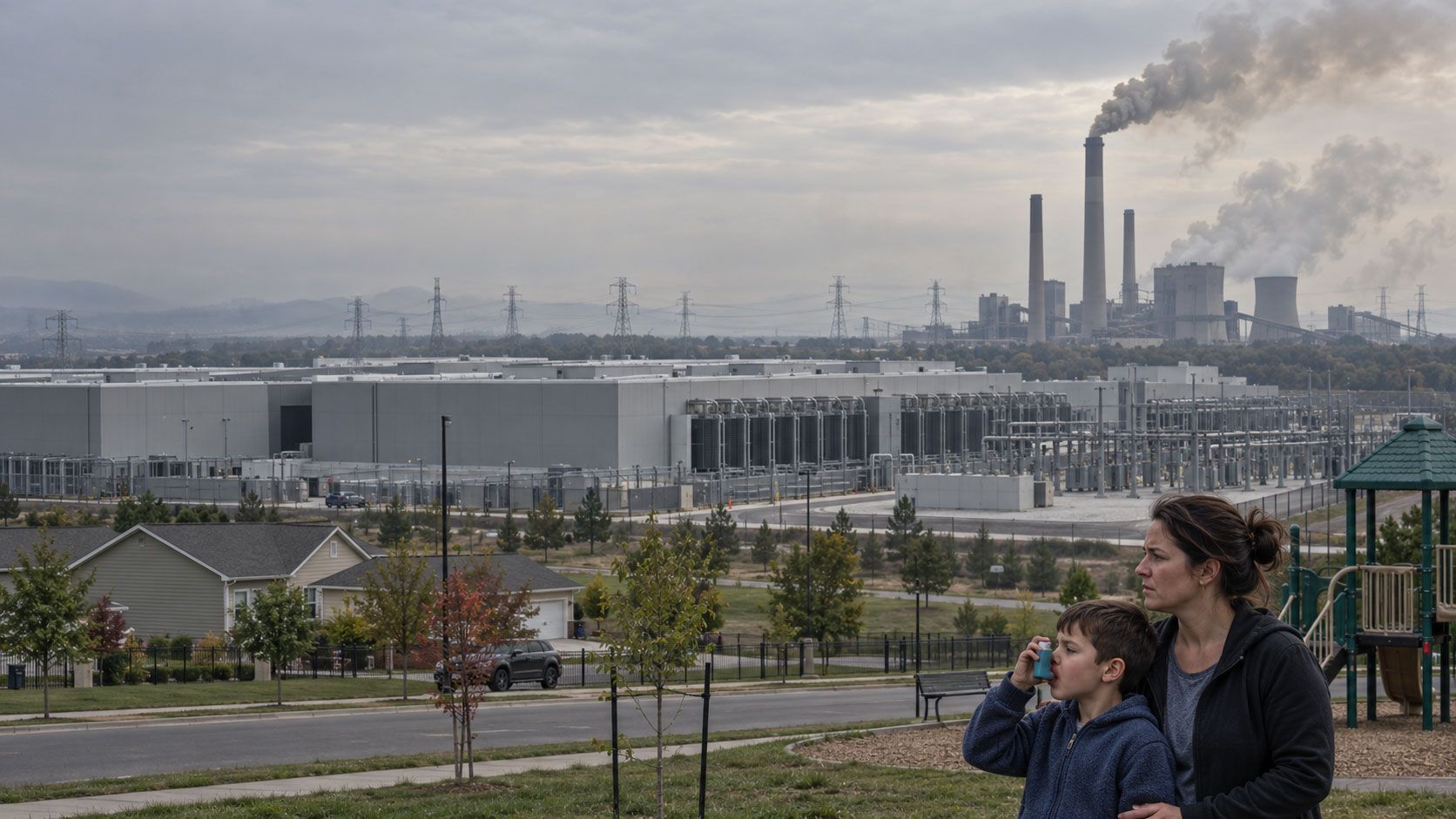
You do not have to be a global warming alarmist to recognize that the expansion of coal and fossil fuels for data centers risks children’s and America’s health.
AI data centers are exploding across America. Over 5,400 are being built, reported to be 200 times the size of a Costco, one in Utah up to 20,000 acres. Anyone with their thinking cap on would see the rooftops of these behemoths and say, “Golly, there’s a good amount of space for solar to power the centers and offset the drain on the grid.”
But no.
In April 2025, President Trump signed an Executive Order to revive what he called America's “beautiful clean coal industry,” citing the electricity demands of artificial intelligence data centers. A year later he invoked the Defense Production Act, designating coal supply chains as essential to national defense. This June, during the boom of AI data centers, he used that authority to direct nearly $700 million toward upgrading thirteen coal plants, building two more, and financing a West Coast export terminal.
This pro-coal strategy was celebrated by the blue-collar workers and unions. It also seemed sensible to revive power sources within U.S. state lines (not foreign oil) to prevent AI Data centers from drawing on existing local power grids and raising residents’ energy prices. Even the EPA declared in its 2027 strategic budget that it will “employ permitting reform” (meaning eliminate regulation) to make the USA the AI data capital of the world. It was presented as a way to preserve America's lead in artificial intelligence, strengthen national security, and revive coal country.
But this month, as Americans confront growing conflict over data center development, the policy became an unexpected point of contention with another constituency that helped deliver President Trump’s 2024 victory.
I joined other leaders of the Make America Healthy Again movement in writing to President Trump that data center demand should not become a justification for burning more coal—or for denying communities basic rights to information, proper assessments, and local control.
For the first time, Moms Across America spoke out on energy and power sources. Previously, our focus has been on food, vaccines, EMFs, and cell towers. But as AI data center buildout quickly approached affecting 47 percent of American residents, and our social media feed bombarded us with residents complaining about noise, contaminated water, or no water at all, we knew we needed to speak up.
We urged the administration to reject coal expansion as the default answer to AI’s electricity needs, preserve safeguards against mercury and coal ash pollution, and require transparent review of data centers’ effects on water, electricity rates, land, and health.
We also made an argument that may surprise some people—that responsibly sited, American-made solar paired with storage deserves a serious look.
MAHA is not part of the conventional environmental movement. And it probably will not ever be. Many of us are skeptical of climate alarmism, global mandates, corporate greenwashing, and policies that treat farmers and rural communities as obstacles. We do not want to be conscripted into someone’s Fortune 500 “net zero” campaign.
But if food is nature, soil is nature, and our health and children’s health depend on nature—then MAHA is, at its core, a movement to defend nature. We can’t credibly fight glyphosate, PFAS, plastics, food dyes, and heavy metals while ignoring mercury, soot, arsenic, and coal ash in the air, water, soil, and food.
HEAVY METALS IN OUR FOOD—THE LIGHT BULB GOES ON
These are not abstract green concerns. When coal burns, the pollution has to go somewhere. It goes into the air, water, soil, fish, crops, and ultimately human bodies. Mercury can damage a child’s developing brain and nervous system. Fine particulate matter can travel deep into the lungs and bloodstream. Coal ash can contaminate drinking water with arsenic, cadmium, radium, and other dangerous substances.
Coal ash also contains thallium, which is even more toxic than lead and mercury. In previous studies (Herrero et al., 1995), thallium has been shown to affect multiple organs and to induce several clinical symptoms, including gastrointestinal, neurologic (depression), dermatological, circulatory, and respiratory symptoms. It is so toxic it is used in rat poison. And yet coal ash, containing all of these heavy metals with known harmful side effects, is not considered waste, nor a toxic waste. It is considered a product that is sold (similar to fluoride from steel factories) into building materials such as drywall and concrete blocks. I was shocked to learn that it is even approved by the USDA to be sold as a filler for fertilizer.
This realization reminded me of the high levels of heavy metals in baby food as stated by the Congressional briefing in 2019 by Healthy Babies Bright Future, showing that organic baby food had the highest levels of heavy metals. Combined with the testing MAA has done, finding extraordinarily high levels of heavy metals in baby formula, school lunches, fast food, and even Girl Scout Cookies; we had more evidence that heavy metals are a serious problem in our food supply. At the time, we could only guess that the heavy metals were coming from the pesticides, as French Scientist, Seralini, tested and revealed in 2018. However, this new (to me) realization that coal ash is used in fertilizer made the high levels of heavy metals in our food all make even more sense.
The realization also supported me to move through my grief. My son, Ben, chose to end his depression and life at 22 years old, after 10 years of eating an organic, whole food, plant-based diet that consisted of a huge bowl of kale salad on a near-daily basis. When tested, both his body and the kale brand he ate showed high levels of toxins, especially thallium. Understanding why my son did what he did—he was poisoned by the heavy metals and toxins in the food supply, helps to alleviate confusion. I cannot get my son back, but perhaps this information will lead to a discontinuation of the use of coal ash in fertilizer, better regulations, and healthier children in other American families.
HEAVY METALS IN OUR WATER
The problem is systemic. Coal ash is not classified as waste or hazardous waste, so it need not be disposed of and can be sold or made profitable, regardless of the impacts. When disposed of, it is often placed in in-ground containers that are not properly lined for hazardous waste, and the toxins leak into waterways, contaminating reservoirs.
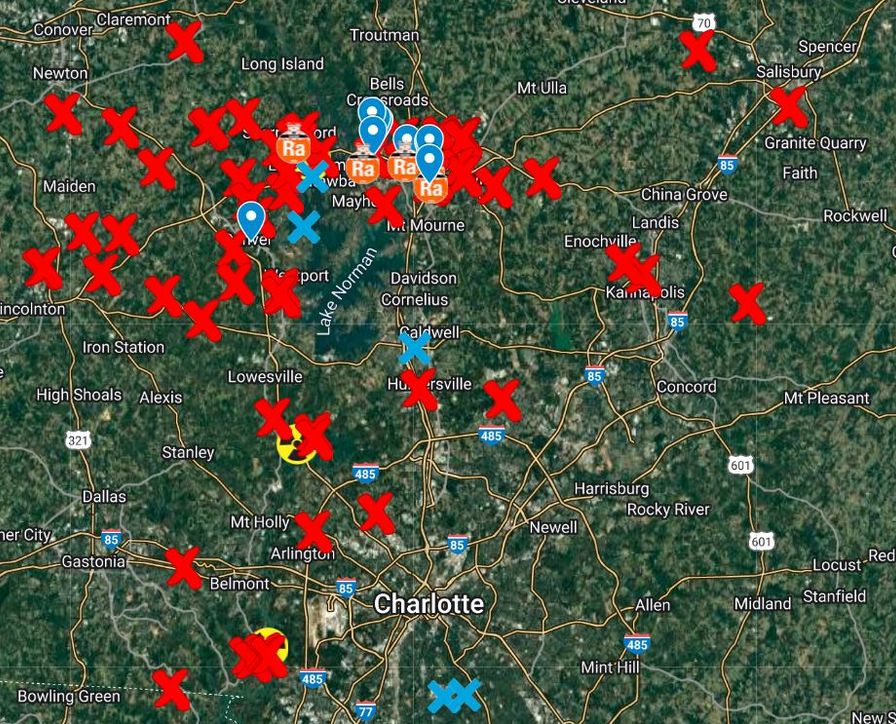
Source: Cancer Cluster Army, “NC Coal Ash, Radiation, & Cancer Map,” August 13, 2024.
Areas like Lake Norman, NC, a wealthy community, listed on CancerClusterArmy.org, have huge cancer clusters due to these heavy metals from the coal power plant. Coal used as a power source for the sprawl of data centers is therefore set to contribute to a massive increase in coal ash leaching into waterways, further increasing already skyrocketing cancer rates.
In a widely shared clip about data center development, President Trump recently said communities must be convinced “how great these things are,” adding: “You can’t fight it. You have to go with it.”
But—regardless of where you stand on the questions of AI and data centers—no community should simply have to “go with” an expansion of toxic coal pollution for America to compete on technology.
This is why many in the MAHA movement are thinking more about solar energy. Sunlight—God’s most abundant gift—can generate electricity without combustion, mercury, soot, or coal ash, while giving families, farms, and communities more control over their own energy.
Harnessing sunlight responsibly is not climate ideology. It is stewardship and self-reliance. Solar can be installed on data center rooftops, on homes, farms, schools, churches, warehouses, parking lots, brownfields, and carefully selected larger sites. Paired with batteries, it can provide backup power during emergencies, strengthen farms and small businesses, and reduce dependence on distant fuel supplies and vulnerable transmission lines. People become producers of energy rather than merely customers for distant utilities and fuel companies.
As advocates for healthy communities, part of where we differ from the climate movement is that we do not pretend these are perfect solutions. Poorly planned projects can consume productive farmland, bypass local voices, rely on foreign supply chains, or deliver profits elsewhere while leaving communities with the burden. So, as leaders from the MAHA movement, we are advocating for solar that respects farmers, families, land, and local communities.
A farmer who wants to put panels over a grazing pasture or along a fence line should be free to do so. Likewise, a farmer who wants nothing to do with solar should be equally free to say no. The people who own the ground are the ones who choose–not Washington mandates or restrictive zoning rules.
Any solar buildout should support American manufacturing wherever possible. We should also stop pretending that every project is automatically virtuous simply because it carries a clean-energy label. Critical thinking and common sense need to prevail over corporate lobby agendas.
America can lead in AI, manufacturing, and national security without asking children to carry more mercury in their bodies, more soot in their lungs, or more contamination in their water.
- Moms Clean Air Force: In April 2026, Pennsylvania organizer Vanessa Lynch stated: “There is nothing clean or affordable about coal fired electricity generation.” The organization says coal plants emit mercury and other toxic pollutants. Its coal fact sheet also states that coal ash contains mercury, lead, arsenic, and other heavy metals that pollute air and contaminate groundwater. In separate EPA testimony, the organization said: “Families have a right to clean air, safe water, and a healthy future.”
- Moms Clean Air Force has explicitly stated that coal-ash waste pits contain “arsenic, lead, mercury, selenium, and other cancer-causing agents” and connects coal ash and power-plant discharges with contamination of waterways and potential impacts on fetal brain and nervous-system development.
- Mothers Out Front: Their current priorities call for moving communities away from fossil-fuel infrastructure and say: “Every child deserves a learning environment that fosters their health, well-being, and future.” Their school campaign specifically calls for “clean air, safe water” and renewable electricity, while their broader work seeks a transition away from fossil fuels and accountability for fossil-fuel companies.
While environmental politics has been polarized for decades, something today is shifting. People from the right and the left are coming together around common sense principles in defense of nature and health. These alliances are needed now more than ever.