
 ™
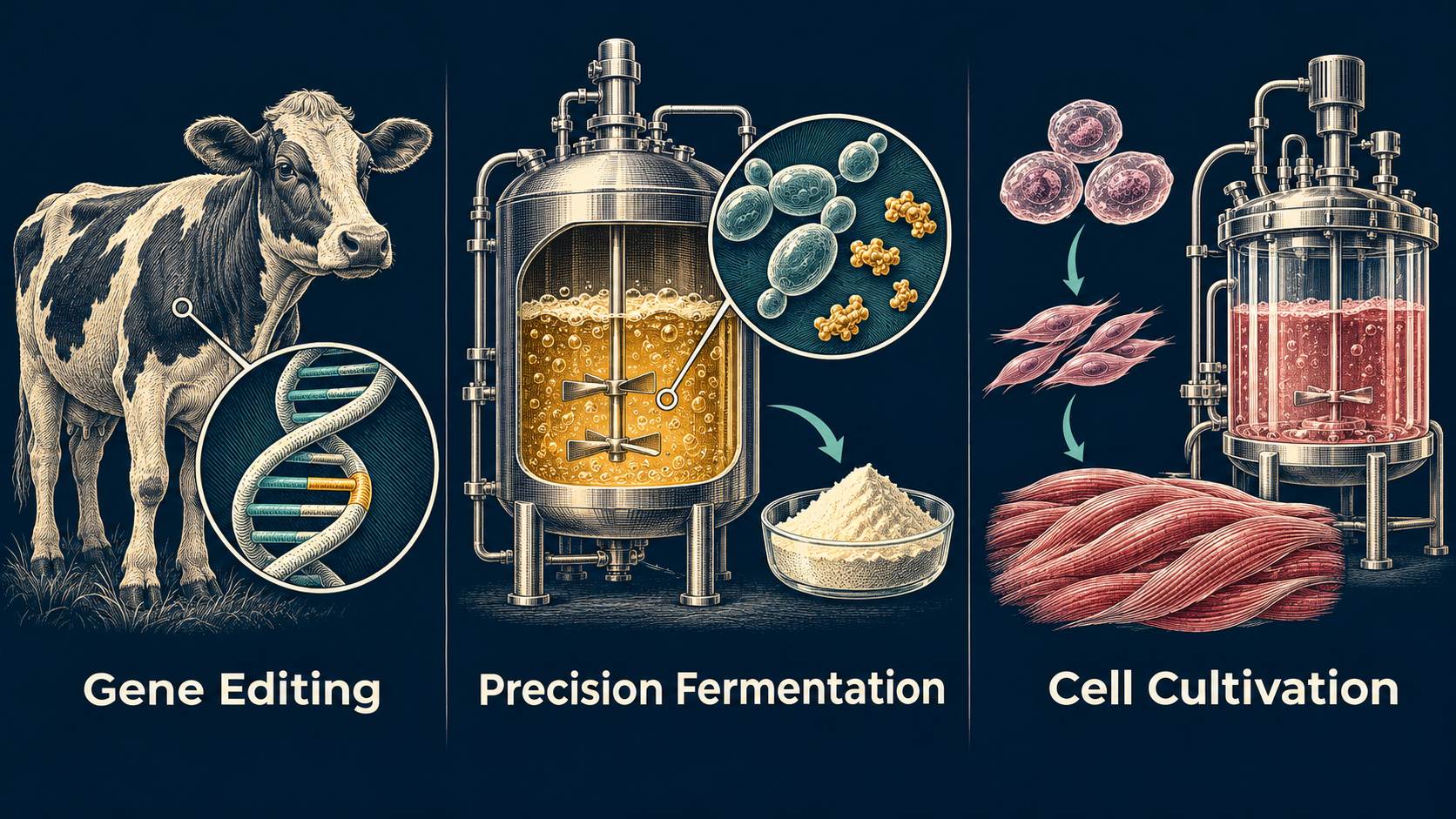
From gene-edited animals and precision-fermented dairy proteins to cultivated meat, a new generation of biotechnology is changing how food is produced. But who is checking the safety, who is telling consumers what is in their food, and will parents still have a choice?

Would you want a gene-edited pig on your Christmas dinner table? What if the ham came from an animal whose genetic makeup had been deliberately altered—and you had no clear way of knowing?It may sound like science fiction, but genetic engineering is moving far beyond the genetically modified crops parents have been debating for years. New technologies are being used to edit plant and animal DNA, engineer microorganisms to manufacture food ingredients, and grow animal cells in laboratories.
The industry calls it innovation. Companies promise efficiency, sustainability, and new food choices. But who is independently evaluating these products before they reach our families' dinner tables?
Parents should not have to wait for problems to emerge before demanding answers.
With a new Congress taking office in January 2027, moms have an important opportunity to demand greater accountability, independent safety research, and transparency in our food supply.
These technologies are not all the same. Here's the difference:
- Gene editing changes the DNA of a plant or animal.
- Precision fermentation uses genetically engineered microorganisms to manufacture food ingredients, such as dairy proteins.
- Cultivated meat uses animal cells grown in controlled environments to produce meat.
For parents, the common concern is that biotechnology is changing how familiar foods are produced, while transparency and independent safety research have not necessarily kept pace.
From GMOs to GMOs 2.0: What is Changing?
Traditional genetic engineering involves introducing genetic material into an organism to give it a desired characteristic. Think of crops engineered to tolerate herbicides or produce their own insecticidal proteins.
Newer technologies, including gene editing, allow scientists to make targeted changes to an organism's existing DNA.
One of the best-known approaches to genome editing is CRISPR/Cas9. Think of it as a molecular editing tool: scientists use a guide to direct an enzyme called Cas9 to a specific location in DNA, where it can cut the genetic sequence so that it can be changed. Genome editing is being used in research involving plants, animals, and microorganisms.
These changes may be promoted as precise, but precision does not automatically mean safe. Researchers continue to investigate unintended genetic changes and their potential effects.
A 2026 review in npj Science of Food, Genome Editing and Food Safety: Bridging the Validation Gap, explains why making a successful genetic edit is not the same as establishing that the resulting food is safe. Food composition, allergenicity, toxicity, and dietary exposure all matter.
And here's the question parents should be asking: Who is checking the finished product—not just the technology used to create it?
Synthetic Biology: Engineering Ingredients in a Tank
Synthetic biology (SynBio) takes genetic engineering further. Scientists can redesign biological systems or program microorganisms to perform specific functions, including manufacturing ingredients used in food.
One growing application is precision fermentation, a technology that uses genetically engineered microorganisms to produce specific proteins and other ingredients.
Here's the simple explanation: companies genetically engineer microorganisms, such as yeast or bacteria, to produce a specific ingredient. The microorganisms are grown in large fermentation tanks, and the desired substance is then collected and processed.
Instead of getting a protein from a cow, for example, a company can program a microorganism to manufacture that protein.
These ingredients can include:
- Dairy proteins such as casein and whey.
- Egg proteins.
- Specialty fats and enzymes.
- Flavors, sweeteners, vitamins, and other food additives.
Traditional fermentation and precision fermentation are not the same thing. Precision fermentation relies on genetically engineered microorganisms, yet consumers may see only the name of the resulting ingredient on a food label.Think about the foods that regularly end up in a family grocery cart: cheese, yogurt, ice cream, baked goods, and packaged snacks. Many contain proteins, fats, enzymes, or other ingredients that can be manufactured through biotechnology. The question is whether parents will be able to distinguish ingredients produced through conventional agriculture from those manufactured using genetically engineered microorganisms.
A 2026 briefing from ETC Group and other civil society organizations raises broader concerns about corporate control of engineered life, proprietary technologies, and the future of food and seed sovereignty.
This isn't just about what goes into a food product. It is also about who controls the technology and the food supply of the future.
A Mom’s Question
Would you know if the cheese in your child's sandwich contained a dairy protein made by genetically engineered microorganisms rather than obtained from milk? Would the label make that clear?
This is why Moms Across America needs your support. We believe parents have a right to know how their food is produced. Your monthly donation helps fund our independent food testing, research, and public education so families aren't left relying on corporate assurances.
Animal-Free Casein: Who Is Making It?
On October 28, 2026, two dairy-biotechnology companies, Those Vegan Cowboys and Formo, announced that they had received FDA "no questions" letters for casein made through precision fermentation.
Casein is a family of proteins that makes up most of the protein in cow's milk. It gives cheese its familiar structure, melting, and stretching qualities. These companies use genetically engineered microorganisms to produce casein without obtaining it from cows.
For parents, this isn't an abstract laboratory development. Casein is a familiar milk protein associated with everyday foods, particularly cheese. Imagine buying cheese for your child's lunch and wanting to know whether its protein came from milk or was manufactured in a fermentation tank using genetically engineered microorganisms. That is a reasonable question about food labeling and consumer choice.
A "no questions" response is not the same as blanket FDA approval. It indicates that the agency has no questions about the company's conclusion that the ingredient is Generally Recognized as Safe (GRAS) under the conditions described in its notice. In other words, the FDA is relying on the company's own safety assessment and supporting data rather than conducting its own independent testing of the product. The company makes the GRAS determination and presents the evidence; the FDA does not independently test every ingredient before issuing a “no questions” response.
This is precisely why consumers should be asking who is testing these novel ingredients, what independent research has been conducted and whether the evidence is sufficient to establish their safety.
This is a time for every mom in America to speak up.
On August 10, 2026, HHS Secretary Kennedy announced a proposed rule requiring food manufacturers to notify the FDA when they determine an ingredient is GRAS and expanding the public inventory of GRAS notices.
This is a major first step—but the GRAS loophole is not closed yet.
The proposed rule is now open for public comment through December 9, 2026. Every mother, parent, and concerned consumer has an opportunity to weigh in.Submit a public comment by December 9.
Parents should be asking:
- Will food labels clearly disclose when casein is produced using genetically engineered microorganisms?
- Has this ingredient undergone independent, long-term safety testing—or are consumers being asked to rely on company-supplied data?
- How will these ingredients be monitored as their use expands in our food supply?
And there's another important detail: animal-free does not mean allergen-free. Casein remains a milk protein and a recognized allergen, even when it is produced without a cow.
What Did Researchers Find in a Precision-Fermented Product?
Pediatrician Michelle Perro, MD has been raising questions about precision fermentation, children's health, and the adequacy of product testing.
In her October 30, 2026, article The FDA Has Questions, So Do We, she describes a meeting with FDA representatives alongside farmer and agricultural researcher Howard Vlieger and molecular biologist Dr. John Fagan.
The discussion included an important question: Are manufacturers examining everything in the finished product, or concentrating primarily on the ingredient they intended to produce?
A 2026 study published in Scientific Reports, Multi-omics Profiling Finds Synbio Milk Differs Nutritionally from Bovine Milk and Contains 93 Uncharacterized Fungal Metabolites and 236 Fungal Proteins, examined a commercial product containing a dairy protein made using genetically engineered Trichoderma reesei, a fungus.
Researchers reported finding:
- 236 fungal proteins associated with the production organism.
- 93 compounds that could not be identified using the databases available to the researchers.
- Differences in protein composition and other nutritional compounds compared with conventional bovine milk.
These findings do not prove that the product is harmful. Unidentified compounds are not automatically toxic, and the study did not demonstrate disease in people who consumed the product.
But the findings raise a question that should not be brushed aside: Has the entire finished product been adequately examined before it becomes a regular part of the food supply?
Parents should not be expected to accept a new food technology first and wait for the research later. Our children are not lab rats to be experimented on.
Cultivated Meat: Is the Safety Evidence Strong Enough?
SynBio is also being used to develop cultivated meat, sometimes called cell-cultured meat. Instead of raising and slaughtering an entire animal, companies grow animal cells in controlled environments to produce meat.
Companies are developing cultivated beef, chicken, and seafood. But how much do we know about the safety of eating these products over time?
A November 3, 2026, FoodNavigator article, Cultivated Meat: Is the Safety Evidence Strong Enough?, examines the limited safety evidence for cultivated meat, including potential microbial contamination, residues from growth media, and the lack of long-term research. The article also highlights the challenge of establishing consumer confidence.
The technology is also moving into other foods. FoodNavigator reported on cell-based chocolate developed with Mondelēz, using cultivated cocoa butter.
From meat and dairy to chocolate, biotechnology is moving into foods that many consumers would never associate with genetic engineering.
Innovation is not a substitute for independent safety research. Before these products become everyday foods, consumers deserve meaningful information about how they are made, what they contain, and what is known about their long-term consumption.
The mRNA Connection: Genetic Engineering Beyond Food
Genetic-engineering technology has also been at the center of controversy surrounding the COVID-19 injections.
In March 2025, Slovak government commissioner Peter Kotlár publicly asserted that COVID-19 injections had turned those who took the injections into GMOs! Aussie17's PharmaFiles reported his statements and his demand that the injections be halted.
In January 2026, Bayer, which acquired Monsanto, filed patent-infringement lawsuits against Pfizer, BioNTech, Moderna, and Johnson & Johnson. The lawsuits allege that the companies used Monsanto-developed genetic-engineering technology in their COVID-19 products. The technology was originally developed to modify genetic sequences and improve protein expression. The Defender’s report Bayer Lawsuit Claims Pfizer, Moderna Used Monsanto's GMO Technology in COVID Vaccines, details the allegations. The lawsuits raise questions about the use of genetic-engineering technology, transparency, and informed consent.
Whether we are discussing food or medical products, people deserve the right to ask questions and make informed decisions.
Who Is Watching the Regulators?
In the United States, oversight of agricultural biotechnology is divided among the Food and Drug Administration (FDA), the U.S. Department of Agriculture (USDA), and the Environmental Protection Agency (EPA).
But regulatory oversight is not the same as comprehensive independent testing.
Meanwhile, the USDA's National Bioengineered Food Disclosure Standard has significant limitations. Certain highly refined ingredients may not require disclosure if they do not contain detectable modified genetic material meeting the standard's criteria.
That means mandatory labeling may not tell consumers when certain ingredients were produced using genetic engineering.
As biotechnology moves into more areas of the food supply, labeling requirements must keep pace. Consumers deserve to know not only what is in their food, but how it was made.
GMOs 2.0: What the Midterm Elections Could Mean for Food Transparency
The November 3, 2026, midterm elections changed the balance of power in Washington. Democrats won control of both the House and Senate, according to the Associated Press, setting the stage for a new Congress in January 2027.
That change brings new congressional leadership and new opportunities for oversight of federal agencies, including the FDA and USDA. Will lawmakers examine how genetically engineered food ingredients are evaluated? Will they demand greater transparency from food manufacturers and stronger disclosure requirements?
Regardless of political affiliation, parents should be urging their newly elected representatives to make food safety, independent testing, and the public's right to know priorities.
The election results don't guarantee any particular policy changes, as we know both parties cater to industry. But they do give Americans another opportunity to demand answers from the people representing them.
What Can Parents Do?
You don't need a degree in biotechnology to ask questions or protect your family's right to choose.
- Choose certified organic when possible. Organic standards prohibit genetic engineering in organic production and processing.
- Read labels. Ask manufacturers how unfamiliar ingredients are produced.
- Know and support your local farmers. Buy directly when possible and ask about growing and processing practices.
- Demand transparency. Ask retailers and food companies whether their products contain ingredients made through precision fermentation or synthetic biology.
- Support independent testing. Organizations like MAA doing this work need public support.
Our Food Supply Should Not Be a Biotechnology Experiment
Do you want a holiday cheese platter made with proteins manufactured by genetically engineered microorganisms? Would you want to know if the food you're feeding your children was produced using these technologies? And shouldn't you have the right to know before you buy it?
These are not unreasonable questions. They are questions every mom should be able to ask.
The biotech/biopharma industries are moving quickly. Regulators are relying on existing frameworks, and consumers are often left trying to understand new technologies after companies have already developed products for the marketplace.
Moms Across America believes parents have a fundamental right to know what is in their food and how it is made. We should not have to rely on corporate promises or wait for problems to emerge before demanding answers.
Our work includes investigating emerging food technologies, supporting independent testing, and educating families. That work takes resources.
Please help us keep asking the questions that matter. Your donation helps support independent research and gives mothers a stronger voice in decisions affecting the food supply and our children's future.
DONATE TODAY TO SUPPORT MOMS ACROSS AMERICA
Our children deserve better than blind trust. They deserve transparency, independent science, and the right to choose.
_____________________________________________________________________________