
 ™

Flu Shots in the Operating Room Under Anesthesia: Let's Slow Down and Ask More Questions
As a doctor and a parent, I take the oath to "do no harm" seriously. That is why I was alarmed to learn that some hospitals give flu shots to children while they are under anesthesia for surgery. Are we sure this is the right moment to give an additional intervention that has known health risks? I could not find adequate long-term safety research about this practice, and for me two days, or even one month, is not enough follow-up time to determine no harm was done.

One more thing for a small body to handle
Surgery is already a big stress on a child. Anesthesia, the procedure, and recovery all change how the body works. Some people also handle inflammation differently than others, and we are still learning what environmental and genetic variables affect individual responses. Adding a vaccine adds one more event to that pile. Its common side effects are headache, tiredness, and fever. After surgery, those same signs can also mean infection or another larger problem. How would a care team know which is which?
What the research shows
I looked for safety studies, and only found two. While the size of the first study was significant, I’m not confident that the timeline of follow-up was adequate to determine “no risk.” The second study had zero reported complications, which seems statistically unlikely. I wonder if there was bias in the collection or reporting of data and if the inquiry was truly comprehensive. The large Kaiser Permanente study of 42,777 surgical patients aged six months and older found no higher risk of fever or return hospital visits for those vaccinated. But most were vaccinated on the day of discharge, not under anesthesia. A Colorado children's hospital gave over 1,000 flu shots under anesthesia and reported no vaccine-related complications. That could sound encouraging, but it was one hospital, and its own lead author said we still need a better understanding of whether vaccinated patients under anesthesia build a truly protective immune response. Lack of documented early signs of issues are not at all the same as proof of long-term safety.
Two children I love
Two children close to me had surgery this past year. One had a serious infection near the brain. Doctors generally treat a fever or serious illness as a reason to wait on a vaccine. The other was born early and was under six-months-old at the time of her first surgery, which is too young for the flu vaccine.
In a busy hospital following standard routines, how can we be sure these cases get noticed? I am not saying a mistake happened. I am asking how we know it won't.
Think about the child with the infection. If a vaccine caused a fever, it could look like the infection getting worse. That might lead to extra antibiotics, more blood draws, or even more surgery. When the surgery involves the brain, doctors watch fever, swelling, and changes in thinking very closely. Adding a second possible unknown makes that harder. If this practice expands to “catch up” and multiple vaccinations are given at once while under anesthesia, we lose the opportunity to accurately measure adverse outcomes or track danger signals.
Is consent really informed?
Picture the parents. Their child is about to have surgery. They are scared and tired, and someone hands them a form. Are they truly able to weigh a vaccine question at that moment? Or are they signing under pressure, trusting the doctor to decide? Informed consent needs time, clear information, and a calm mind.
I also wonder about the reasons behind the push. Hospitals track their vaccination numbers. I hope the goal is protection, not just a better score. When numbers drive the process, checklists can crowd out careful or responsible thinking.
Taking flu seriously
Flu can be dangerous, and I don't want to downplay it. The CDC counted 280 child flu deaths in the 2024-25 season, the most in a non-pandemic season since tracking began in 2004. Fifty-six percent had an underlying medical condition, which is important to note as it can significantly increase risks. So the question is not whether to support a stronger immune system in children, it is when and how? What is truly best for children’s health? What do the safety studies truly measure and are we getting the whole picture?
The facts are that the flu shot is only 19-41 percent effective according to the CDC, because the flu virus mutates every year. The vaccine manufacturers are making their best guess for which flu virus they are vaccinating. In the meantime, the contents of the flu shot include:
Ingredients in children's Fluzone versus elderly Fluzone High-Dose
*Official FDA 2026-2027 formulations. Amounts per injection.
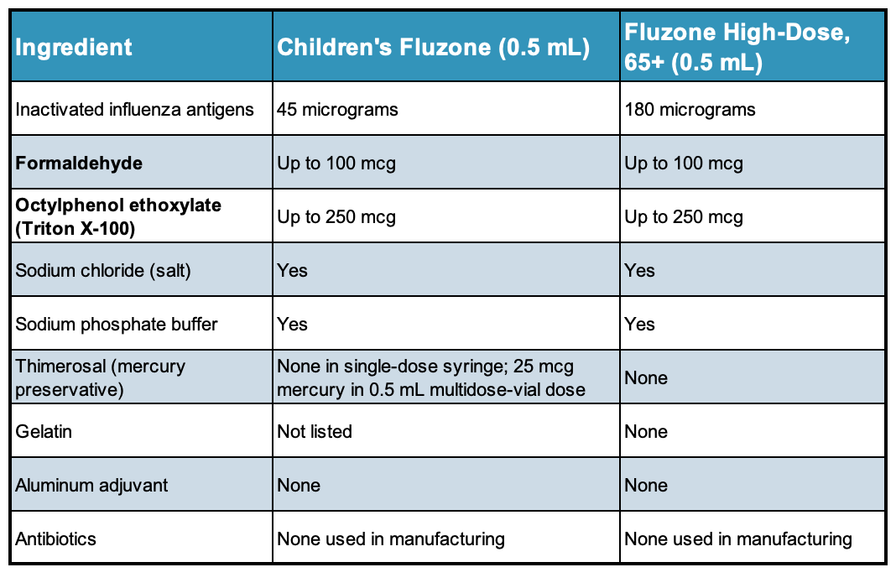
For children ages 6-35 months receiving the smaller 0.25 mL Fluzone dose, the quantities of influenza antigen, formaldehyde, Triton X-100, and, if applicable, mercury are half the amounts shown above.
Sources: FDA package inserts for Fluzone and Fluzone High-Dose.
The important difference: Fluzone High-Dose contains four times as much influenza antigen as the regular 0.5 mL Fluzone shot. It does not contain four times as much formaldehyde or Triton X-100.
Fittingly, many pediatric anesthesiologists surveyed preferred to schedule surgery one to six weeks after a flu shot. That suggests a better option: consider vaccination at a calm, separate time, when any side effect has a clear explanation.
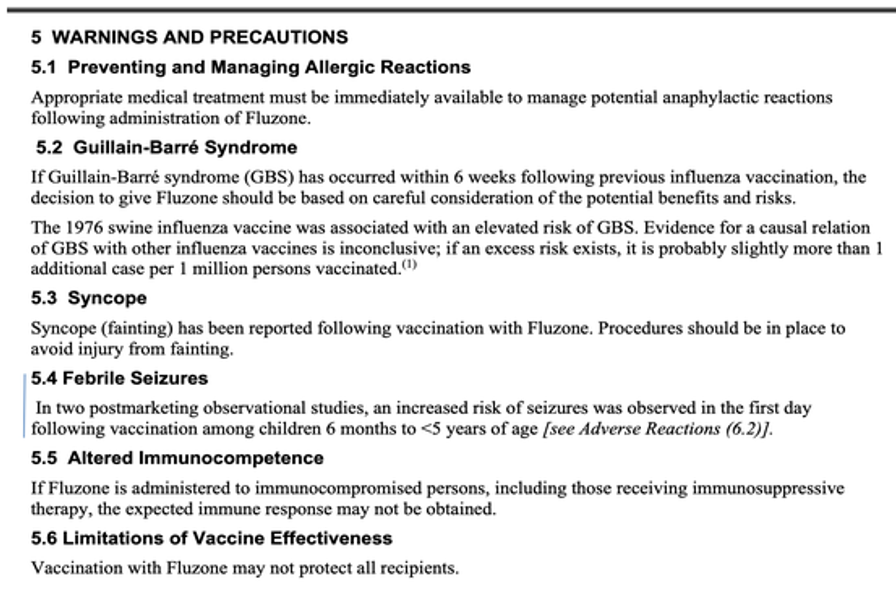
Link to vaccine information insert.
My recommendation: move carefully
Before any child is vaccinated during a procedure, I want to see (and Moms Across America agrees) :
- A real check for fever, infection, and age limits.
- Clear, plain-language information for parents, with ample time to decide.
- Parents are given the vaccine information insert, with a full list of side effects.
- Parents advised that a child with the MTHFR, or a dozen other gene variants, can impair their body’s ability to detox some ingredients in vaccines and may lead to harm or death.
- A simple option to vaccinate later instead.
- More honest follow-up on outcomes for children vaccinated under anesthesia compared to children who were not vaccinated.
- Full disclosure on the risks or side effects of combination vaccinations or vaccines at the same time as other medical interventions.
- Recommend reading the book, Vax-Unvax: Let the Science Speak, by Dr. Brian Hooker, for further information on the costs versus benefits of vaccination, particularly by age group.
Protecting children and being careful are compatible. We need more transparent conversations about risks, options, and more opportunities for truly informed consent. The guiding force needs to be the oath all doctors take, which includes the promise to do no harm.
________________________________________________________________________________
Sources:
https://pmc.ncbi.nlm.nih.gov/articles/PMC12463192/
https://www.consultant360.com/qas/pediatric-influenza-vaccination-during-general-anesthesia
CDC MMWR, 2024–25 pediatric flu deaths; HealthDay; CIDRAP on vaccine effectiveness against death; Healio on the Kaiser study; Colorado study; Consultant360 interview