
Testing Results
Glyphosate Test Results in Wine and Beer
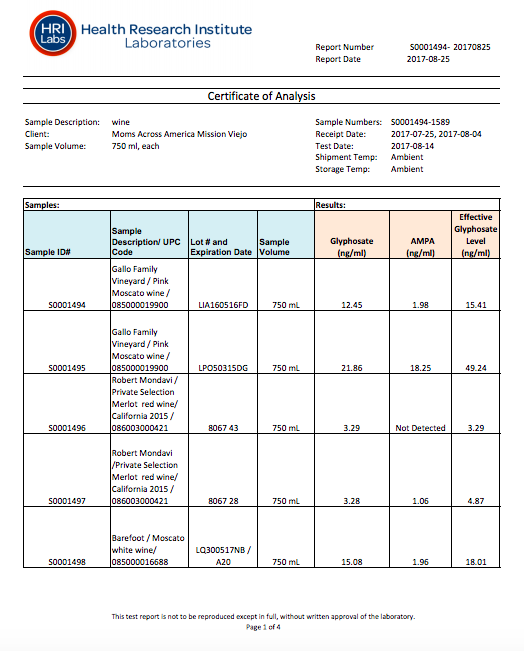
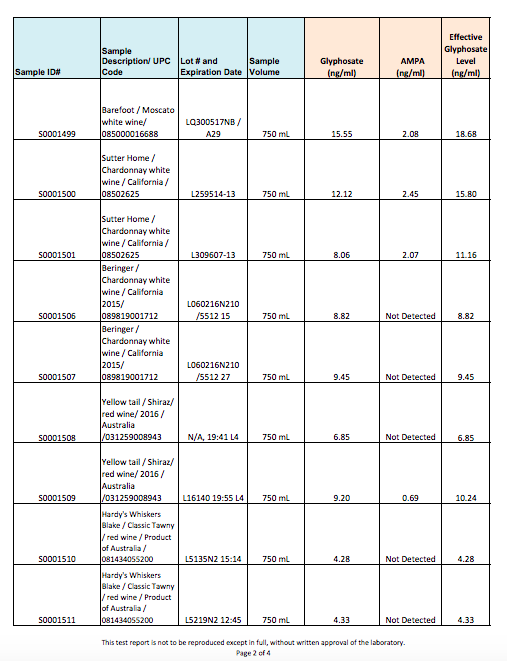
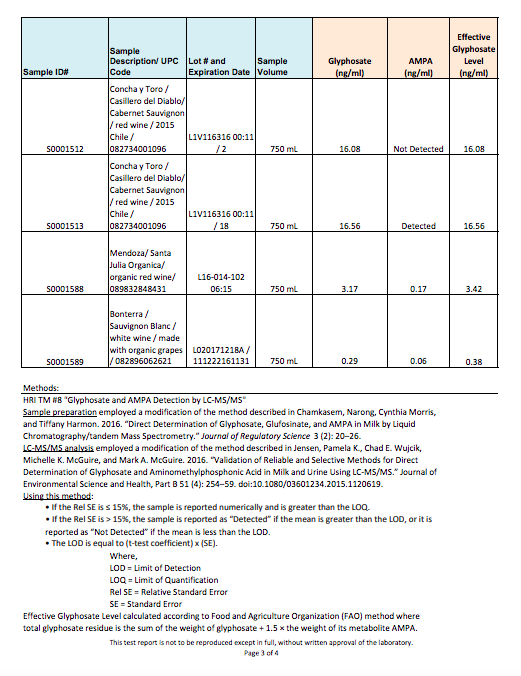
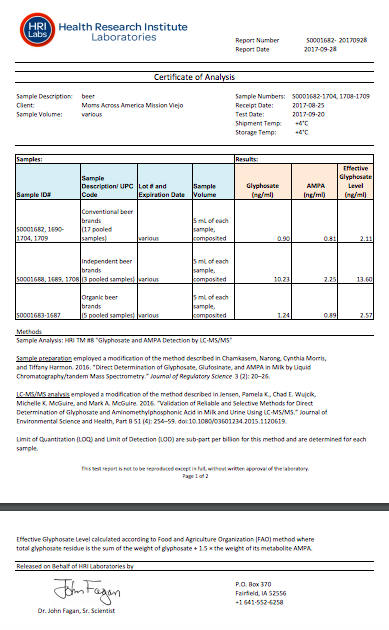
Moms Across America tested popular conventional and organic wine and beer brands for glyphosate residues. The results show widespread contamination — including in organic varieties.
About This Testing
Grapes used for wine production are among the most heavily sprayed crops in conventional agriculture. Glyphosate is applied as a weed killer in vineyards and can absorb into the vine, appearing in the grapes and ultimately the wine.
Hops and grains used in beer production are also routinely treated with glyphosate, particularly as a pre-harvest desiccant on grain crops. This testing examined multiple popular brands including conventional, organic, and biodynamic-certified products.
The data tables below show the full laboratory results from this testing. All levels are reported in parts per billion (ppb) or parts per trillion (ppt) as noted.
Key Takeaways
- •Glyphosate was detected in the majority of wine and beer samples tested
- •Organic wines contained lower levels but were not entirely free of contamination
- •The EU maximum residue limit for glyphosate in wine is 0.1 mg/kg (100 ppb)
- •No U.S. federal standard exists specifically for glyphosate in beer or wine
Laboratory Data Tables
The following images show the full results from independent laboratory analysis of wine and beer samples.


What You Can Do
While no wine or beer is entirely guaranteed to be glyphosate-free given the widespread use of this chemical in agriculture, consumers can reduce their exposure by choosing certified biodynamic wines, which tend to have lower pesticide loads.
You can also contact your favorite brands directly and ask them to test their products and publish the results. Consumer pressure has driven many brands to adopt stricter sourcing standards.
Explore More Testing Results
See all of MAA’s independent food and water testing research.