
Moms Across America
← Back to BlogTest Results

Test Results of Wine and Beer

Independent laboratory testing reveals glyphosate and arsenic contamination in popular wine and beer brands — including products labeled organic.

Key Findings

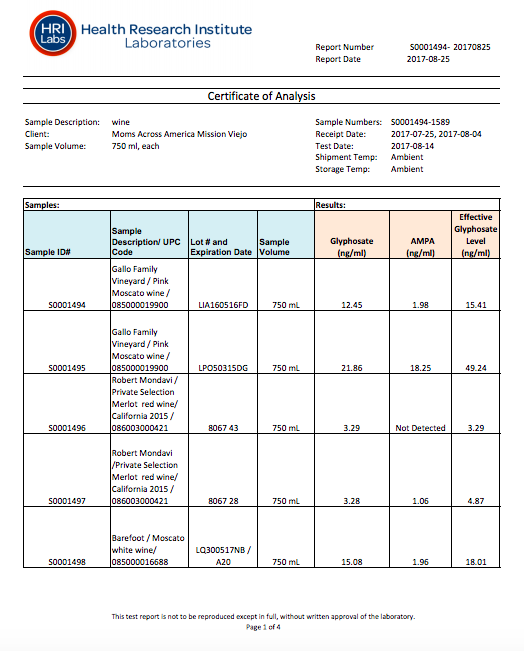
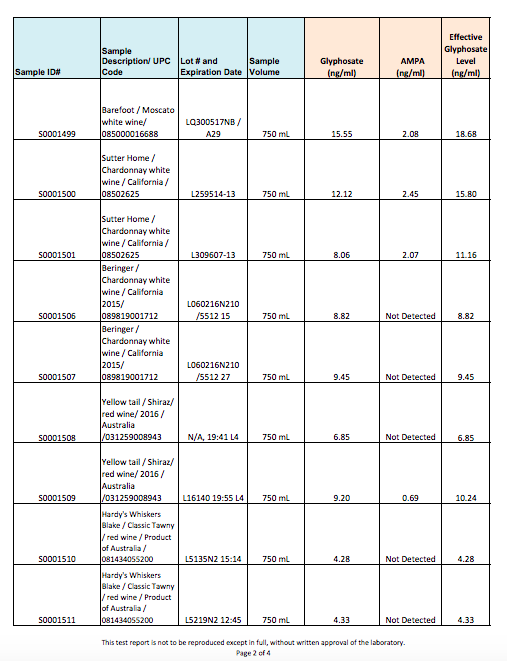
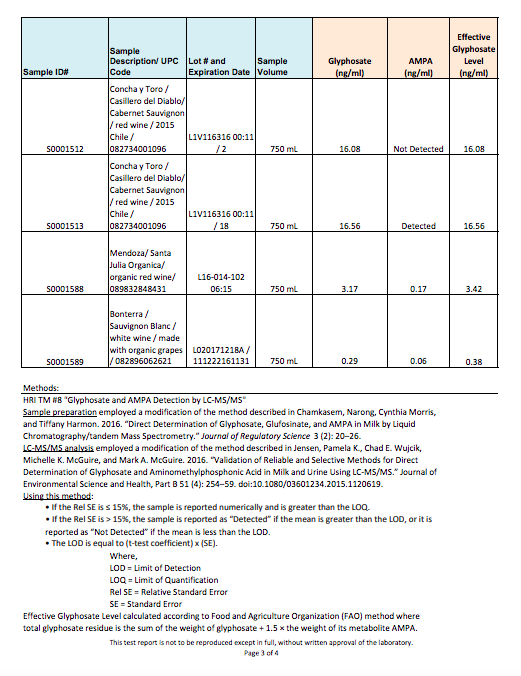
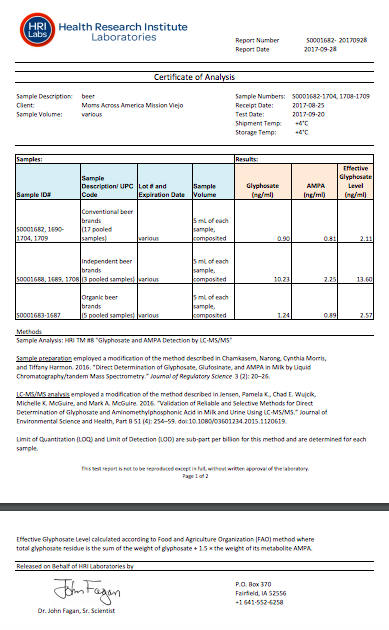
Moms Across America commissioned independent laboratory testing of popular wine and beer brands to check for the presence of glyphosate (the active ingredient in Roundup) and arsenic. The results were concerning — and surprised many consumers.

Both conventional and organic products tested positive for glyphosate. This finding underscores the pervasive nature of glyphosate contamination in our food and beverage supply. Even products produced under organic standards are not immune to contamination from environmental sources.

Glyphosate in Wine

Multiple conventional and organic wines tested positive for glyphosate residues. Levels varied by brand, but the presence in organic wine raises serious questions about environmental contamination from drift, water supply, and soil persistence.

Glyphosate in Beer

Beer brands — both craft and mass-market — showed detectable glyphosate levels. Notably, some organic beer samples showed higher glyphosate levels than their conventional counterparts, likely due to contaminated water sources used in brewing.

Arsenic Contamination

In addition to glyphosate, arsenic was detected in several wine samples. Arsenic is a known carcinogen, and chronic low-level exposure through beverages represents an under-recognized health risk for regular wine consumers.

Organic Not Immune

Some organic beer showed higher glyphosate levels than conventional beer. This is likely due to water quality — glyphosate is present in many municipal water supplies and groundwater sources, contaminating products regardless of farming practices.

Why This Matters

Glyphosate Is Everywhere

When even organic products test positive, it demonstrates that glyphosate contamination is systemic — present in water, soil, and air. Individual consumer choices alone cannot solve a problem this pervasive.

Water Quality Is the Weak Link

The finding that organic beer can contain more glyphosate than conventional beer points directly to water contamination. Breweries and wineries source water locally, and if that water contains glyphosate, the final product will too — regardless of organic certification.

No Safe Level Has Been Established

While regulatory agencies set "acceptable" limits, there is growing scientific evidence that even low-level chronic exposure to glyphosate may disrupt the gut microbiome, endocrine system, and cellular function over time.

Consumers Deserve Transparency

Most consumers have no idea that their wine or beer may contain pesticide residues. Independent testing like this fills the gap left by regulators who do not routinely test alcoholic beverages for glyphosate.

Full Lab Reports Available

Complete laboratory analysis reports with specific brand names, glyphosate and arsenic levels (in ppb), testing methodology, and lab certifications are available upon request. These reports were conducted by independent, accredited laboratories using validated testing methods.

Request Full Reports →

Related Research

Continue exploring MAA's independent testing data and contamination research.

Support Independent Testing

MAA funds independent lab testing because regulators won't. Your donation directly supports the testing that uncovers what's really in our food and beverages.

Translate this page