
 ®
®
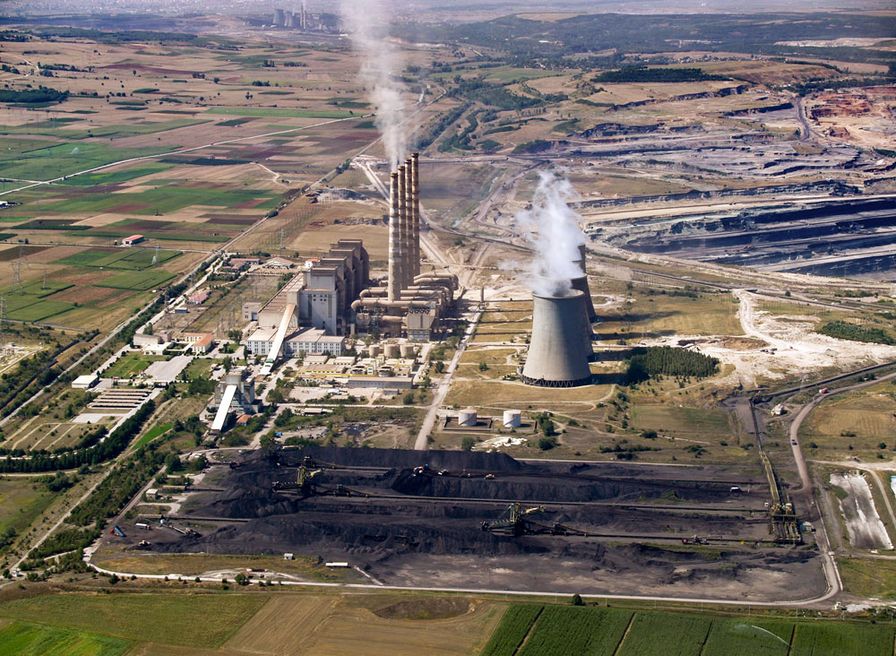
In April, President Trump invoked the Defense Production Act to boost US coal production. The Administration specifically cited artificial intelligence, warning that without more coal-fired power, America would lack the electricity required for defense installations, industrial expansion, and the high-energy demands of AI data centers.
The news brought to mind another recent use of the Defense Production Act that caused major pushback from the Make America Healthy Again community: expanding domestic production of glyphosate. Many of us in the MAHA movement have spent years calling attention to the ways glyphosate, pesticides, PFAS, plastics, heavy metals, and other toxins are getting into our food, water, soil, blood, breast milk, and children’s bodies. My organization, Moms Across America, has repeatedly commissioned laboratory testing showing contamination in our food supply. We have made real progress in convincing this Administration to recognize that chronic disease is both a medical issue and a food issue.
But it is also an air, water, and industrial pollution issue.
We in the MAHA movement are certainly not foot soldiers for the climate agenda. We are not asking for a Green New Deal or for government policies focused on greenhouse gases. Many of us have serious reservations about fear-based climate messaging, top-down federal mandates, carbon-credit schemes, and massive industrial “green” projects that do not respect nature, farmers, families, local communities, or basic common sense.
But we are a movement for clean air, clean water, healthy soil, strong families, and respect for God’s creation. If an energy policy—like the recent executive order on coal—puts more mercury in the air, more soot in kids’ lungs, more arsenic in groundwater, and more toxic coal ash near our homes and schools, then it deserves serious scrutiny from MAHA.
As Charles Eisenstein, who served as an adviser and speechwriter during Secretary Kennedy’s presidential campaign, recently wrote, “We will never be healthy on a sick planet.”
That does not mean MAHA supporters are suddenly siding with the left. It means we should advocate for what we know is true: a child’s lungs are not separate from the air. A mother’s breast milk is not separate from the food supply. A baby’s developing brain cannot be insulated from the mercury, lead, pesticides, plastics, and industrial pollutants that regulators allow into the environment.
My son Ben, may he rest in peace, understood this when he was eight years old. When his little brother asked why we had to be nice to nature, Ben answered, “Because we ARE nature.”
I voted for Trump because he had the wisdom to bring Robert F. Kennedy, Jr. onto his team. Secretary Kennedy has spent much of his career fighting pollution that impacts not only waterways, but us. Before he became known nationally for his work on public health, he was one of America’s most important environmental attorneys. He sued polluters and stood with communities whose rivers, air, and land were treated as dumping grounds. His work on America’s health is a continuation of those efforts.
So when the Trump Administration uses emergency powers to expand coal, when the Department of Energy keeps old coal plants online, when the EPA weakens mercury and air toxics safeguards, and when regulators extend deadlines for coal wastewater compliance, the MAHA movement has a responsibility to speak up.
These actions are not compatible with the promise to Make America Healthy Again. They are not what many MAHA voters supported. It matters not to me if MAHA has been “duped” as some divisive media outlets claim.
What matters is what we are all going to do now.
The EPA’s own research says mercury exposure can harm unborn infants’ developing brains and nervous systems. Its science says coal ash can contain contaminants, including mercury, cadmium, and arsenic, and that improper management can pollute waterways, groundwater, drinking water, and air. It is also well established that fine particulate matter can get deep into the lungs and even into the bloodstream, and that children are among the people most at risk from particle pollution.
If the Administration wants to maintain support from MAHA families, farmers, and health advocates, it must recognize that coal deregulation and the weakening of rules on toxic chemicals are not compatible with children’s health.
When coal burns, the pollution has to go somewhere: into air, water, soil, fish, and ultimately our food and our lungs.
From a MAHA perspective, we should favor energy that reduces toxic exposure, strengthens local resilience, respects farmers and communities, and does not require more mercury, soot, coal ash, and toxic wastewater. Solar can raise questions about land use—but it deserves a more serious look from conservatives and MAHA advocates.
Sunlight does not require combustion. It cannot be sanctioned by foreign governments. Some may say it means generating our energy from light that comes from God. When done responsibly, it can provide cleaner and more resilient power for our communities.
It should not be controversial to say that energy policy should not leave children and families exposed to known toxins like mercury, arsenic, soot, and coal ash.
As President Trump, EPA Administrator Zeldin, and Administration officials seek to carry the mantle of MAHA, they must remember that this movement is not only about food and medicine. It is also about the air and water that kids need to survive and thrive.