
 ®
®
Testing Results
Glyphosate Testing: American Mothers' Breast Milk, Urine and Water
April 7, 2014 — Zen Honeycutt (Moms Across America) and Henry Rowlands (Sustainable Pulse). Supporter: Lori Grace, Environmental Arts & Research.
Lab Report
Glyphosate Testing: American Mothers' Breast Milk, Urine and Water
In the first ever testing on glyphosate herbicide in the breast milk of American women, Moms Across America and Sustainable Pulse have found ‘high’ levels in 3 out of the 10 samples tested. The shocking results point to glyphosate levels building up in women’s bodies over a period of time, which has until now been refuted by both global regulatory authorities and the biotech industry.
Key Findings
3 of 10
Breast Milk Samples Positive
760–1600×
EU Drinking Water Limit
10×
Higher Than EU Urine Average
70%
Drinking Water Positive
Glyphosate Test Results
Conducted by**Moms Across America

******and [Sustainable Pulse ](http://sustainablepulse.com/)********
April 7, 2014
Zen Honeycutt, Moms Across America | Henry Rowlands, Sustainable Pulse
Supporter: Lori Grace, Environmental Arts & Research
**D****ownload pdf of report here **
Contents:
- Press Release
- What is Glyphosate?
- ****Quotes from Scientists on Testing
- ****Quotes from Mothers on Testing
- ****Similar Testing on Urine in Europe
- ****Independent Science on Glyphosate
- ****Testing Method
- ****Testing Results – Tables / Maps
- ****Contacts
- ****References
(1) World’s Number 1 Herbicide Discovered in U.S. Mothers’ Breast Milk
*Urine Testing also Shows Levels over 10 Times Higher than in Europe*****
*Water Testing shows 70% of American household's drinking water positive for above detectable levels*
In the first ever testing on glyphosate herbicide in the breast milk of American women, Moms Across America and Sustainable Pulse have found ‘high’ levels in 3 out of the 10 samples tested. The shocking results point to glyphosate levels building up in women’s bodies over a period of time, which has until now been refuted by both global regulatory authorities and the biotech industry.
The levels found in the breast milk testing of 76 ug/l to 166 ug/l are 760 to 1600 times higher than the European Drinking Water Directive allows for individual pesticides (Glyphosate is both a pesticide and herbicide). They are however less than the 700 ug/l maximum contaminant level (MCL) for glyphosate in the U.S., which was decided upon by the U.S. Environmental Protection Agency (EPA) based on the now seemingly false premise that glyphosate was not bio-accumulative.
Glyphosate-containing herbicides are the top-selling herbicides in the world and are sold under trademarks such as Monsanto’s ‘Roundup’. Monsanto’s sales of Roundup jumped 73 percent to $371 million in 2013 because of its increasing use on genetically engineered crops (GE Crops).

The glyphosate testing commissioned by Moms Across America and Sustainable Pulse, with support from Environmental Arts & Research, also analyzed 35 urine samples and 21 drinking water samples from across the US and found levels in urine that were over 10 times higher than those found in a similar survey done in the EU by Friends of the Earth Europe in 2013.
The initial testing that has been completed at Microbe Inotech Labs, St. Louis, Missouri, is not meant to be a full scientific study. Instead it was set up to inspire and initiate full peer-reviewed scientific studies on glyphosate, by regulatory bodies and independent scientists worldwide.
The initial testing was done using ELISA tests and due to a high minimum detection level in breast milk and urine, it is possible that even those samples which tested negative contained ‘worrying’ levels of glyphosate.
Moms Across America Founder and Director, Zen Honeycutt, stated Monday, “When I was told by several doctors and labs that I could not test my own or my children's urine for the most widely used herbicide in the world over a year ago, I became determined to find a way. Parents and citizens deserve the ability to be able to take care of themselves and their families by finding out if herbicides could be impacting their health. The purpose of this glyphosate testing project is to shed light upon the presence of glyphosate in our water, children's bodies and mother's breast milk, hopefully inspiring further scientific studies to support the world in being a healthy, safe place to live.
“It is important to note that the mothers and supporters who participated in this project are mostly familiar with GMOs and glyphosate. The majority of them have been trying to avoid GMOs and glyphosate for several months to two years, so the findings are alarming. We can only wonder what the levels of glyphosate are in those who are not aware of GMOs and glyphosate,” Honeycutt added.
High Glyphosate Levels – Danger for Infants?
There is currently no regulatory limit for the amount of glyphosate in breast milk anywhere in the world. However, the EPA has set a legally enforceable maximum contaminant level (MCL) for glyphosate of 700 ug/l in drinking water, which is 7,000 times higher than the MCL in Europe.
Monsanto and regulatory bodies worldwide have based all of their regulations on the assumption that glyphosate is not bio-accumulative. Senior Monsanto scientist, Dan Goldstein, even recently stated (1) , “If ingested, glyphosate is excreted rapidly, does not accumulate in body fat or tissues, and does not undergo metabolism in humans. Rather, it is excreted unchanged in the urine.”
The discovery of levels of glyphosate in breast milk that are much higher than any reported results for urine samples is a source of concern to both the general public and government regulators worldwide, as the data suggests that glyphosate is bio-accumulative; building up in people’s bodies over a period of time.
Earth Open Source Research Director Claire Robinson said, “Regulators and industry always say it is the dose that makes the poison, and even the increasing levels of glyphosate currently found in food and feed and the environment are not a problem. However, that argument only holds true if glyphosate doesn't build up in the human body and is excreted as fast as we take it in. These breast milk results suggest glyphosate may bio-accumulate. That means that our body tissues might be exposed to higher levels than the so-called safe levels set by regulators. So the regulations are not protecting us."
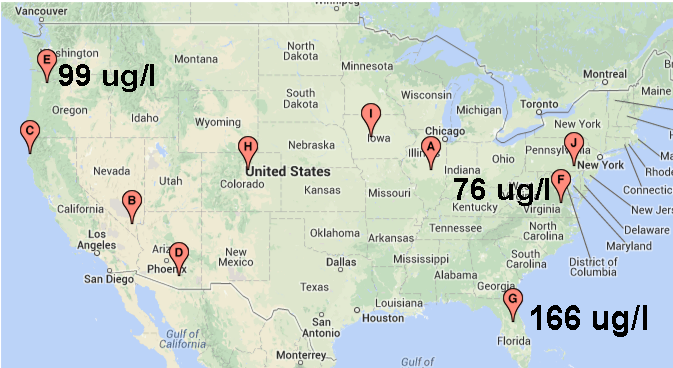
From a total of 10 samples sent in by mothers from states across the U.S., 3 women had detectable levels of glyphosate in their breast milk. The highest glyphosate level was detected in a mother from Florida (166 ug/l) and the other two mothers with ‘positive’ results were from Virginia (76 ug/l) and Oregon (99 ug/l).
Dr Angelika Hilbeck, senior scientist at the Institute of Integrative Biology in Zurich, stated,
“If confirmed in a full investigation, it seems that glyphosate has become a ubiquitous chemical in terms of presence and persistence. This data also offers a first indication of potential accumulation in the human body, giving newborns a substantial dose of synthetic chemicals as a ‘gift' for their start into life, with unknown consequences. This is reckless and irresponsible conduct in a democratic society, which still has a living memory of previous reckless chemical contaminations, such as DDT. It seems we either did not learn, or we have forgotten, our lessons from Rachel Carson!”(2)
Honeycutt added, “Moms Across America feels very strongly that breast milk should still be the number one choice for mothers and certainly preferred over GMO soy formula ingredients. We just urge all mothers to eat as organic as possible, especially avoiding meat, dairy, oils and grains that are sprayed with glyphosate at harvest as a drying agent.”
“What we have found encouraging is that the women who have been eating organic and non-GMO food only, for several months to two years, did not find detectable levels of glyphosate in their breast milk.”
Why Are Glyphosate Levels in Urine Higher than in Europe?
In 2013 people in 18 countries across Europe were found to have traces of glyphosate in their urine by a test commissioned by Friends of The Earth Europe (3). The maximum levels of glyphosate found in the tests ranged from 0.16 ug/l in Switzerland to 1.82 ug/l in Latvia.
Shockingly, the new US testing by Moms Across America and Sustainable Pulse, with support from Environmental Arts & Research, found maximum glyphosate levels in urine over 8 times higher than those found in Europe.
From the 35 samples received from across the U.S., 13 samples were above the minimum detectable level. The three highest levels were all found in women, with the highest in Oregon (18.8 ug/l). Other positive results were found in samples from the states of California, Washington, Maryland, Colorado and Hawaii.
Experts point to the GE Crop industry as being to blame for the results in both breast milk and urine, due to the amount of glyphosate used on ‘Roundup-Ready GE Crops’ in the U.S.
The U.S. has a high percentage of its farmland controlled by the GE crops industry, with many varieties of GE soybeans, GE corn, GE cotton and others, whereas Europe has only allowed one GE Crop – Monsanto’s MON810 maize – which is still not grown in most EU states due to health and environmental concerns.
A 2012 study published by Washington State University research professor Charles Benbrook (4) found that the use of glyphosate in the production of three genetically modified herbicide-tolerant crops - cotton, soybeans and corn - has increased. Benbrook’s analysis was the first peer-reviewed, published estimate of the impacts of genetically engineered (GE) herbicide-resistant (HT) crops on pesticide use.
Benbrook’s response to the findings: "Most genetically engineered soybeans now moving through trade channels worldwide contain 2 ppm to over 10 ppm of glyphosate plus its major metabolite, AMPA. These are extraordinarily high residues that raise concerns, given that many people are exposed to glyphosate through drinking water, the air, and a variety of foods. I am particularly worried by exposures during pregnancy and through the first years of a child's life, when the risk of harm to developing organ systems is greatest. More research is urgently needed on glyphosate's capacity to disrupt normal development,” Benbrook stated.
Glyphosate in U.S. Drinking Water
In this initial testing phase 21 samples of drinking water were tested for glyphosate from across the Unites States individually by Moms Across America supporters.
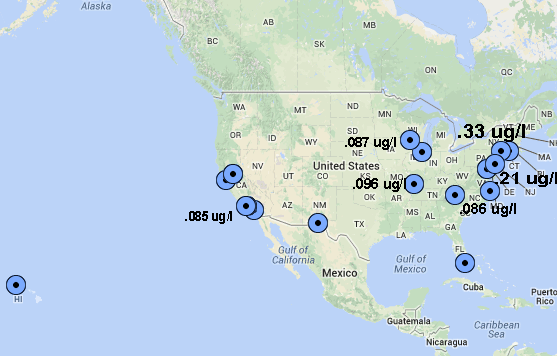
13 of the samples contained glyphosate levels of between 0.085 ug/l and 0.33 ug/l. This is well below the levels found in both urine and breast milk but is still cause for concern, as the European (EU) maximum allowed level for glyphosate in drinking water is 0.1 ug/l.
Regulatory Bodies Urged to Act – Further Testing Needed
The US Environmental Protection Agency (EPA), U.S. Department of Agriculture (USDA), European Food Safety Authority (EFSA), Food Standards Australia New Zealand (FSANZ) and other regulatory bodies around the world are being urged to act following the release of this initial testing data, to prevent what is a dangerous public health situation.
Sustainable Pulse Director Henry Rowlands stated, “Regulatory bodies and governments worldwide need to act fast to ban all glyphosate-based herbicides as a temporary measure, while further long-term testing is completed by both them and independent scientists. This is the only way that they can regain the trust and protect the health of mothers, infants and the general public as a whole.”
“It was a huge mistake by both the U.S. government and the biotech industry to promote and release products without long-term independent studies. What we are now looking at with glyphosate-based herbicides is a similar situation to what we all faced in the 20th Century with PCBs, DDT and Agent Orange,” Rowlands concluded.
Due to the testing results and skyrocketing health issues, as a matter of precaution, Moms Across America calls for a cease and desist of the practice of spraying glyphosate on GE foods and as a drying agent on food crops, increasing the consumption of glyphosate in our food, including but not limited to, wheat, corn, soy, sugar, rice, dry peas and beans and tea. The EPA lists over 160 foods with allowable levels of glyphosate that are unacceptable to mothers.
Moms Across America and Sustainable Pulse are also calling for:
- Adequate long-term independent testing to ensure that glyphosate herbicide formulations as sold and used are not persistent, bio-accumulative or toxic. This testing must include the outcomes most relevant to children’s health.
- The U.S. Congress should supply funding for urgently needed long-term independent research on glyphosate herbicide formulations, including their health effects, how they get into the human body, and current levels of accumulation in people, animals and the environment. Studies performed for regulatory authorization up until now have only tested the isolated ingredient glyphosate, not the complete formulations as sold and used, even though the formulations have been found in many studies to be much more toxic than the isolated ingredient. Also these studies are funded by the agrochemical industry, i.e. they are not independent. Finally, they are kept secret under commercial confidentiality rules, so cannot be scrutinized by independent scientists and the public.
PCB Similarities
This case of finding high levels of glyphosate in breast milk is a re-run of the Polychlorinated biphenyls (PCBs) scandal (5) in the 1970s, which ended up in the toxic chemical compound’s production being banned by the U.S. Congress in 1979.
Before the ban Monsanto, the only North American producer, had marketed PCBs under the trade name Aroclor from 1930 to 1977 and had insisted that it was not toxic.
It was not until levels of PCBs in breast milk were found to be 10 times those in blood, obtained from residents in the Osaka Prefecture of Japan (6), that the toxicity of PCBs was questioned by regulators, leading to the 1979 ban.
According to the EPA, PCBs, which were widely used for over 40 years as dielectric and coolant fluids, have now been shown to cause cancer in humans.
Is it not time that regulators learned lessons from past mistakes?
(2) What is Glyphosate?
Glyphosate is the presumed active ingredient of Roundup and other commercial glyphosate herbicide formulations. Glyphosate was developed by John E. Franz of Monsanto Company. It was first used in 1972 as a non-selective, water-soluble herbicide with a specific mechanism of action: the directed interruption of plant development through metabolic poisoning. The chemical is a specific inhibitor of the plant enzyme 5-enolpyruvylshikimate-3-phosphate synthase (EPSPS), which does not exist in mammals, including humans. Based on this known mechanism of toxicity, the herbicide has been claimed to have low toxicity for mammalian species. However, glyphosate and its formulations have other mechanisms of toxicity.
Monsanto’s US patent for Roundup expired in 2000 and it ceased production in 2007. Other glyphosate herbicides manufactured by Monsanto, such as PROMAX and WeatherMAX, are in current use. Moreover, numerous generic glyphosate formulations (e.g. Clearout 41) are now produced by at least 100 manufacturers worldwide.
Glyphosate is:
#1: A Patented Antibiotic – USPTO # 7771736. Leading to concerns about possible harm, including the killing of beneficial gut bacteria which causes immune system damage.
[http://patft.uspto.gov/netacgi/nph-Parser?Sect1=PTO2&Sect2=HITOFF&u=%2Fnetahtml%2FPTO%2Fsearch-adv.htm&r=1&p=1&f=G&l=50&d=PTXT&S1=7771736&OS=7771736&RS=7771736](http://patft.uspto.gov/netacgi/nph-Parser?Sect1=PTO2&Sect2=HITOFF&u=%2Fnetahtml%2FPTO%2Fsearch-adv.htm&r=1&p=1&f=G&l=50&d=PTXT&S1=7771736&OS=7771736&RS=7771736)
#2: Chelating Agent - Although glyphosate can be rapidly immobilized in soil (also spray tank mixtures, and plants) through chelation with various cat-ions (Ca, Mg, Cu, Fe, Mn, Ni, Zn), it is not readily degraded and can accumulate for years (in both soils and perennial plants). Glyphosate’s chelation properties may lead to possible harm such as vitamin and mineral deficiencies.
**http://www.archpatent.com/patents/3160632**
Glyphosate has been shown in several recent studies to be an endocrine disruptor. According to the National Institutes of Health, endocrine disruptors could have long-term effects on public health, especially reproductive health. And the “dose makes the poison” rule does not apply to endocrine disruptors, which wreak havoc on our bodies at low doses.
Most genetically modified (GM) crops are engineered to tolerate the herbicide Roundup, Monsanto's best-selling product. The main active ingredient in Roundup is glyphosate. A number of glyphosate-resistant crops are also produced by Monsanto.
**Health Risks
**
Laboratory and epidemiological studies confirm that Roundup and glyphosate pose serious health and environmental hazards, including possible endocrine (hormone) disruption, cell death, DNA damage, cancer, birth defects, and neurological disorders.
Some of these toxic effects are observed at low, realistic doses that could be found as residues in food and feed crops and in drinking water.
People are exposed to glyphosate though contaminated food, water and air, often as a result of the herbicides application to fields. This is not only the case in rural areas, where ‘Roundup Ready’ GM crops are grown on a large scale. Glyphosate-based herbicides are widely used by municipal authorities on roadsides, pavements, and in public parks and school grounds. It is also widely used by home gardeners.
Roundup and glyphosate and their residues have been detected in previous testing in air, rain, groundwater and even circulating in women’s blood.
Not Enough Safety Tests
Roundup and other glyphosate herbicide formulations as sold and used have been found in studies to be more toxic than the isolated ingredient, glyphosate. However, only glyphosate alone is tested in long-term safety tests for regulatory authorizations. This is a fundamental problem affecting all pesticide authorizations.
The ‘safe’ dose for Roundup exposure set by regulators is not based on up-to-date objective evidence. So, current regulations do not protect the public.
The chemicals used in the GM model of farming are toxic, and the model of farming itself is unsustainable and damaging to the environment – with an increase in herbicides significantly increasing pollution and health risks for citizens, and contributing to biodiversity loss. The only people who stand to gain from this model are those that produce the herbicide-resistant crop the chemicals required to grow them.
The chemicals used in the GM model of farming are toxic, and the model of farming itself is unsustainable and damaging to the environment – with an increase in herbicides significantly increasing pollution and health risks for citizens, and contributing to biodiversity loss. The only people who stand to gain from this model are those that produce the herbicide-resistant crops and the chemicals required to grow them.
(3) Quotes from Scientists on Testing
Dr. Don M. Huber, Professor Emeritus, Purdue University.
"It is well established in the scientific literature that glyphosate disrupts the endocrine hormone system, and is toxic to liver and kidney tissues, a strong mineral chelator, and a potent antibiotic that kills essential microorganisms in the gastro-intestinal tract. The levels observed in breast milk and urine in this preliminary survey indicate that intake of this chronic toxin is highly biologically significant and almost 100 times the amounts documented in peer-reviewed scientific studies to cause birth defects, kidney and liver damage, hormonal disruption, and predispose to cancer. Much higher levels of glyphosate in breast milk than urine indicate a concentration factor that can especially compromise the health and development of an infant through direct toxicity, deprivation of essential mineral nutrients, and dysbiosis of the microbiome essential for immune, neural and physical development. Additional testing is essential to confirm the validity of this data on a larger scale if we are to avoid compromising the health and well-being of an entire generation."
Jack Heinemann, Professor of genetics and molecular biology in the School of Biological Sciences at the University of Canterbury, Christchurch, New Zealand.
“We have an inadequate knowledge of the effects of real life exposures to the many potentially and actually toxic chemicals that are part of daily modern life. This snapshot of just one pervasive chemical, glyphosate, in the fluids of human bodies is therefore important and timely. No single study of this type or scale is enough to determine if this chemical alone or in combination with the many other “approved as safe if exposed below certain amounts” cause harm. But that this study was initiated by a grassroots campaign rather than government or funded by the industries that profit from mass release of these compounds, says to me how neglected this area of public good research is.
“Glyphosate was measured in parts per billion in urine and breast milk. Are these levels too low to cause harm in people after a lifetime of constant low level exposure? Possibly, but possibly not.
“What does this mean for women who choose to breastfeed? In my opinion, the many good things that breastfeeding does for babies far outweighs the risk of the low level exposures to this pesticide. But it is also my opinion that, until such low level exposures to nursing babies can be determined to be safe there should be an obligation placed on the pesticide industry and the relevant government agencies to reduce exposures that are sufficient to cause accumulation of the pesticide in breast milk.
“Urban lawns and roadsides as well as the farm in America and many other places have become addicted to these agrochemicals. There is far too little emphasis on providing services to agriculture that reduce this dependency and too much emphasis on innovation dependent upon it. Let’s wean the farmer from these chemicals rather than our babies from their milk.”- Heinemann
Anthony Samsel, a former private environmental U.S. government contractor as well as a member of the Union of Concerned Scientists
“Everyone eating the western diet of food grown, sprayed and desiccated with Monsanto’s Roundup herbicide can expect to find its active ingredient glyphosate in their body. Glyphosate chelates chemical elements important to our existence, disrupts vitamin synthesis and detoxification enzymes like glutathione and CYP 450 enzymes, as well as many essential amino acids. Glyphosate is an antibiotic, capable of killing hundreds of species of bacteria which are directly responsible for our immune function and overall health. It is a chronic toxin, a chemical weapon like no other, which is capable of killing organisms both directly and indirectly. Monsanto’s Roundup-glyphosate based herbicide may in fact be, the most disruptive chemical to our biology and our environment.
“The glyphosate in humans data recently collected from volunteers across the USA serves as a snapshot of the general population... Breast milk samples contained levels from 76 to 166 ug/L, levels that can cause harm. The thought of babies receiving glyphosate through their mother’s milk is particularly troubling as it demonstrates that there is no escape from this antibiotic chemical.
“If the HPLC method was used (High Pressure Liquid Chromatography), it would have yielded an increased statistical result, as this method has a lower range of detection. However, there is a higher cost associated with the method which would have made it prohibitive for many participants. The result of my own urine test in this group was below the detection level, as were over 50% of the participants. Dietary exposure is an obvious function in this regard. Not all glyphosate ingested is passed in the urine and feces, a small portion is metabolized to AMPA another toxin. The remainder of the glyphosate continues to circulate in the blood and cerebral fluid where it travels to the cells and causes cumulative, chronic damage. It is deposited in the body's tissues which include but are not limited to the liver, kidneys, pancreas, heart and other muscles.
“We have got to get glyphosate out of the food supply. Our health and the health of those we love may be in grave danger from exposure to this chemical. It is urgent that people know and time is of the essence. Every moment lost will be a new health casualty.”- Samsel
(4) Quotes from Mothers on Testing
Jessica M. from Virginia:
"It is frightening to see any glyphosate in my body, especially in my breast milk that will then contaminate my son's growing body. It's particularly upsetting to test positive for glyphosate because I go to great lengths to eat organic and GMO free. I do not consume any meats or seafood and only very rarely eat dairy. This really shows me, and should show others, just how pervasive this toxin is in our food system."
Rachel T. from Illinois:
“I tested negative. I am relieved to know that the time, money, and effort we have spent to source good quality, organic, GMO-free food over the past several years has paid off. This should offer hope and encouragement to many families; that what we eat truly does affect us. I hope that someday in the future the knowledge of how to source these foods becomes more main stream so that others can benefit and heal their bodies from the countless health problems caused by GMO laden foods.”
Most recent map of glyphosate use in America with Breast Milk results. Red-Negative, Green Positive.
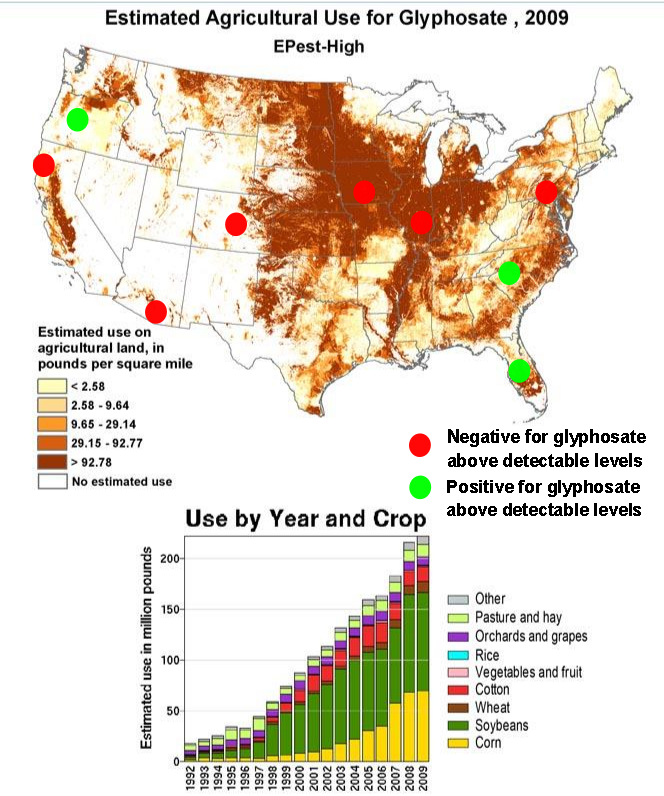
Moms Across America discovered that the quantity of local glyphosate spraying at farms does NOT correlate to positive or negative glyphosate detectable levels in mothers, suggesting the glyphosate is coming from another source, such as national brands of food, which are not connected to local environmental conditions. Manufacturers must be responsible and conduct further testing.
(5) Similar testing on Urine in Europe
Two full-scale glyphosate testing projects have been carried out in Europe over the last year on urine in humans.
The first was organized by Friends of the Earth Europe and the second was led by Dr. Monika Krüger of the University of Leipzig in Germany.
When looking at the data from both of these tests please keep in mind that the U.S glyphosate testing has already detected glyphosate levels in urine of between 8.1 ug/l and 18.8 ug/l with a much smaller survey.
Determination of Glyphosate residues in human urine samples from 18 European countries: (Medical Laboratory Bremen commissioned by Friends of the Earth Europe)
**http://www.gmoevidence.com/wp-content/uploads/2013/06/glyphosate_studyresults_june12.pdf**
In this study, 182 urine samples received from 18 European countries were analyzed for glyphosate and AMPA residues using a new GC-MSMS method. With a LOQ of 0.15 ug/l, on average 44 % and 36 % of the urine samples analyzed were found to contain quantifiable levels of glyphosate and AMPA, respectively. However the frequency of detection calculated for each individual EU-state ranged from 10% to 90%. The highest glyphosate concentration was 1.8 ug/L (Latvia), the highest AMPA concentration was 2.6 ug/L (Croatia). All in all 12 (6.6%) participants of the study significantly exceeded the tentative reference value of 0.8 ug/L for glyphosate.
Detection of Glyphosate Residues in Animals and Humans: Dr. Monika Krüger
In this study glyphosate residues were tested in urine and different organs of dairy cows as well as in urine of hares, rabbits and humans using ELISA and Gas Chromatography-Mass Spectroscopy (GC-MS). Cows kept in genetically modified free area had significantly lower glyphosate concentrations in urine than conventional husbandry cows. Also glyphosate was detected in different organs of slaughtered cows as intestine, liver, muscles, spleen and kidney. Fattening rabbits showed significantly higher glyphosate residues in urine than hares.
Glyphosate was significantly higher in the urine of humans who didn’t eat organic food. Furthermore, chronically ill humans showed significantly higher glyphosate residues in urine than in the healthy population.
The glyphosate levels detected Kruger’s study were all under 2 ug/l in human urine.
(6) Independent Science on Glyphosate
There have been a large number of independent studies carried out on glyphosate and Roundup which show why the public and media should be concerned over the possible harm that the herbicide is causing.
Below is a small selection of these studies. For a wider selection please visit here: http://www.gmoevidence.com/location/roundup-evidence/
2014: Glyphosate, Hard Water and Nephrotoxic Metals: Are They the Culprits Behind the Epidemic of Chronic Kidney Disease of Unknown Etiology in Sri Lanka?: Dr. Jayasumana (Sri Lanka)
The Sri Lankan President has put a ban on all glyphosate-based pesticides following this study.
The study published in the International Journal of Environmental Research and Public Health links glyphosate (Roundup) to a series of mysterious epidemics of fatal chronic kidney disease of unknown origin (CKDu) affecting several poor farming regions around the world. The current death toll from CKDu is 20 000 and the number of those with the disease number over 400 000.
Full Paper Here: **http://www.mdpi.com/1660-4601/11/2/2125**
2013: Glyphosate induces human breast cancer cells growth via oestrogen receptors: Dr. Thongprakaisang (Thailand)
This study shows that glyphosate exerted proliferative effects only in human hormone-dependent breast cancer, T47D cells, but not in hormone independent breast cancer, MDA-MB231 cells, at 10-12 to 10-6 M in estrogen withdrawal condition.
Full Paper Here: http://www.ncbi.nlm.nih.gov/pubmed?term=Thongprakaisang%20S%5BAuthor%5D&cauthor=true&cauthor_uid=23756170
2010: Glyphosate Based Herbicides Produce Teratogenic Effects on Vertebrates by Impairing Retinoic Acid Signalling: Dr. Andres Carrasco (Argentina)
This study, by a team led by Prof Andres Carrasco at Buenos Aires University , found that glyphosate and Roundup cause birth defects in frog and chicken embryos at extremely low doses.
http://www.gmwatch.eu/images/pdf/Carrasco_research_paper.pdf
More information on glyphosate’s possible links to birth defects can be found here: http://www.earthopensource.org/files/pdfs/Roundup-and-birth-defects/RoundupandBirthDefectsv5.pdf
2012: Teratogenic Effects of Glyphosate-Based Herbicides: Divergence of Regulatory Decisions from Scientific Evidence: Dr. Michael Antoniou (UK)
Malformations were seen from the administration of glyphosate to rabbits and rats in studies commissioned by industry for regulatory purposes. These effects were not found only at high maternally toxic doses but also at lower doses. Statistical significance was not always achieved at lower doses because too few animals are used in such tests. “Historical control data” and other excuses were used to dismiss the findings.
Full paper here: http://omicsonline.org/2161-0525/2161-0525-S4-006.php?aid=7453
2004: Neural Tube Defects and Maternal Residential Proximity to Agricultural Pesticide Applications: Dr. Rull (US)
This study evaluated the effects of maternal environmental exposure to 59 agricultural pesticides on neural tube defects (NTDs) in babies born in California between 1987 and 1991. Maternal residential proximity within 1,000 meters of crop pesticide applications occurring around the month of conception was assessed using a model based on linking California Pesticide Use Reports (PUR) and land-use survey maps. The study found an association between glyphosate exposure and anencephaly, a type of neural tube defect.
Full paper here: http://journals.lww.com/epidem/Fulltext/2004/07000/Neural_Tube_Defects_and_Maternal_Residential.499.aspx
2002: Birth defects, season of conception, and sex of children born to pesticide applicators living in the Red River Valley of Minnesota, USA: Dr. Garry (U.S.)
An epidemiological study carried out in Minnesota, USA found that the children of pesticide applicators exposed to glyphosate herbicides had an increased incidence of neurobehavioral disorders, including ADHD (attention deficit hyperactivity disorder). This suggests that glyphosate herbicide impacts neurological development.
Full paper here: http://www.ncbi.nlm.nih.gov/pubmed/12060842
2007: Evaluation of DNA damage in an Ecuadorian population exposed to glyphosate: Dr. Paz-y-Miño (Ecuador)
Ecuadorian people exposed to aerial glyphosate herbicide spraying on coca crops showed a much higher degree of DNA damage in blood cells than a control population living 80 km away. The researchers ruled out tobacco, alcohol, non-prescription drugs and asbestos as causes. None of the individuals had used or been exposed to other herbicides or pesticides when the samples were taken. The study also found acute poisoning reactions to the glyphosate spraying, including intestinal pain and vomiting, diarrhoea, fever, heart palpitations, headaches, dizziness, numbness, insomnia, burning eyes, blurred vision, difficulty in breathing, and skin rash.
Full paper here: http://www.scielo.br/pdf/gmb/v30n2/a26v30n2.pdf
1997: Male Pesticide Exposure and Pregnancy Outcome: Dr Savitz (Canada)
A study of farming families in Ontario, Canada found a higher than normal rate of late miscarriages and pre-term deliveries associated with glyphosate exposure.
Full paper here: http://aje.oxfordjournals.org/content/146/12/1025.full.pdf
2005: Differential effects of glyphosate and roundup on human placental cells and aromatase: Dr Seralini (France)
**http://www.ncbi.nlm.nih.gov/pmc/articles/PMC1257596/**
2006: Time- and Dose-Dependent Effects of Roundup on Human Embryonic and Placental Cells: Dr Seralini (France)
**http://www.gmoseralini.org/wp-content/uploads/2013/01/Benachoural.AECT_2007.pdf**
In these in vitro experiments, glyphosate was found to be toxic to human placental cells and Roundup formulation was more toxic. Glyphosate and Roundup damaged human embryonic cells and placental cells in vitro in concentrations well below those recommended for agricultural use. The study’s authors concluded that Roundup may interfere with human reproduction and embryonic development.
(7) Testing Method
Glyphosate Testing Method: Glyphosate Plate Assay
The testing of drinking water, urine and breast milk was carried out by Microbe Inotech Laboratories, Inc. (MiL inc.)
For the detection and quantitation of glyphosate in water (groundwater, surface water, well water), urine and breast milk, the MiL inc. uses a 96 well microtiter plate assay. For soil, crop, and foods, additional preparation steps are required but can be processed at a small additional fee. This assay applies the principles of enzyme linked immunosorbent assay methodology (ELISA) to the determination of glyphosate.
The sample to be tested is derivatized and then added, along with an antibody (binding protein) specific for glyphosate to microtiter wells coated with Goat Anti-Rabbit Antibody and incubated for 30 minutes. A glyphosate enzyme conjugate is then added.
This particular format is known as a competitive ELISA assay since, at this point in the procedure, a competitive reaction occurs between the glyphosate which may be in the sample and the enzyme labeled glyphosate analog for the antibody binding sites on the microtiter well.
The reaction is allowed to continue for sixty minutes. After a washing step and addition of a substrate (color solution), a color signal (blue color) is generated. The presence of glyphosate is detected by adding the “Color Solution”, which contains the enzyme substrate (hydrogen peroxide) and the chromogen (3,3’,5,5’-tetramethylbenzidine). The enzyme-labeled glyphosate bound to the glyphosate antibody catalyzes the conversion of the substrate/chromogen mixture to a colored product.
After an incubation period, the reaction is stopped and stabilized by the addition of a diluted acid (Stopping Solution). Since the labeled glyphosate (conjugate) was in competition with the unlabelled glyphosate (sample) for the antibody sites, the color developed is inversely proportional to the concentration of glyphosate in the sample.
Six concentrations (0, 0.75, 0.2, 0.5, 1.0, 4.0 ppb) of glyphosate standards in distilled water with a non-mercury preservative and stabilizers are used to generate a standard response curve. A control solution at approximately 0.75 ppb of glyphosate is included in every run and treated in the same manner as unknown samples to serve as a positive control within the assay. The color absorbance is read using a microplate reader (see Figure).
Any results obtained with a calculated glyphosate concentration of less than 0.05 ppb is assumed to be below the detection limit of the assay with glyphosate reported as being absent (7.5 ppb detection limit for Urine) (75 ppb detection limit for Breast Milk).
(8) Test Results
Test Results for the presence of Glyphosate in American Mother’s Breast Milk
Partial display. Interactive Map at **http://batchgeo.com/map/9bcabad4abf8e4c4fafa883251c6754d******
**
**
Test Results for the presence of Glyphosate in American Mothers’ Breast Milk
Project #
Sample #
Test Results
Age
Gender
Weight
State
Zip
062A
1
<75 ug/L
26
F
105
IL
62521
062B
1
<75 ug/L
43
F
225
NV
89109
062C
1
<75 ug/L
32
F
113
CA
95521
062D
1
<75ug/L
26
F
110
AZ
85741
062E
1
99 ug/L
28
F
165
OR
97202
62F
1
76 ug/L
22
F
100
VA
23220
062G
1
166 ug/L
30
F
180
FL
32726
062H
1
<75 ug/L
39
F
145
CO
80229
062I
1
<75 ug/L
29
F
130
IA
50031
062J
1
<75 ug/L
30
F
125
PA
17601
Test Results for the presence of Glyphosate in the urine of American adults and children.
Partial display. Interactive Map link to Urine Test results for glyphosate **http://****batchgeo****.com/map/997080dd3f0dbc59b5de665f4ea04bf1**
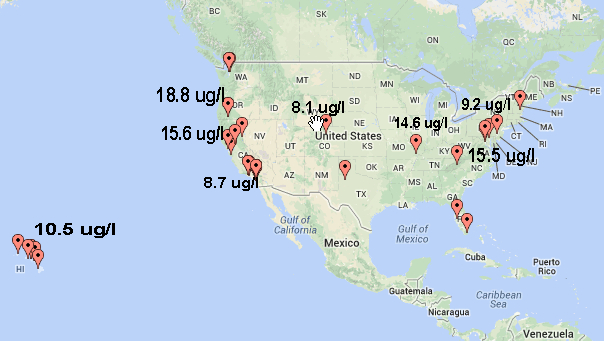
Of the 35 initial samples sent in 34% of the people tested positive for detectable levels of glyphosate in their urine. 85% of all participants noted that they were actively avoiding GE foods and pesticides in their diet.
Test Results for the presence of glyphosate in the urine of American people and children.
Project #
Sample #
Matrix (Water/Urine)
Test Results
Age
Gender
Weight (lbs)
State
Zip
glyph001
1
U
8.7 ug/L****
8
M
52
CA
92691
glyph002
1
U
<75 ug/L
67
F
130
HI
96821
glyph004
1
U
8.5 ug/L
13
CA
91320
glyph007
2
U
<7.5 ug/L
44
F
180
FL
33030
glyph014
2
U
<7.5 ug/L
39
F
130
PA
19072
glyph016
2
U
15.5 ug/L
52
F
140
NC
28711
glyph018
2
U
15.6 ug/L
69
F
127
CA
95608
glyph023
1
U
9.2 ug/L
65
M
210
MD
20874
glyph020
3
U
<7.5 ug/L
45
F
125
MD
21022
glyph037
1
U
<7.5 ug/L
64
M
140
NH
03037
glyph 036
1
U
<7.5 ug/L
53
F
120
CA
91377
glyph 038
2
U
<7.5 ug/L
68
F
129
CA
91361
glyph 038
2
U
8.5 ug/L
13
M
100
CA
91320
glyph040
1
U
<7.5 ug/L
39
F
FL
34219
glyph042
1
U
<7.5 ug/L
63
F
120
CA
94920
glyph044
1
U
15.5 ug/L
60
F
130
OR
97520
glyph044
2
U
18.8 ug/L
26
F
109
OR
97520
glyph046
1
U
13.3 ug/L
66
F
160
WA
98036
glyph046
2
U
<75 ug/L
4
F
40
WA
98036
glyph048
1
U
<7.5 ug/L
40
F
115
CA
92691
glyph048
2
U
<7.5 ug/L
11
M
75
CA
92691
glyph048
3
U
<7.5 ug/L
5
M
36
CA
92691
glyph048
1
U
<7.5 ug/L
8
M
56
CA
92691
glyph055
1
U
<7.5 ug/L
39
F
130
CA
92672
glyph055
2
U
<7.5 ug/L
4
M
35
CA
92672
glyph055
3
U
<7.5 ug/L
4
M
38
CA
92672
glyph059
1
U
8.1 ug/L
6
M
49
CO
80302
glyph 064
2
U
14.6 ug/L
4
F
45
MO
63701
glyph066A
1
U
<7.5 ug/L
31
F
115
HI
96725
glyph066C
1
U
<7.5 ug/L
61
F
129
CA
95066
glyph066D
1
U
<7.5 ug/L
31
M
180
HI
96732
glyph066Da
1
U
8.6 ug/L
28
M
160
HI
96729
glyph066E
1
U
<7.5 ug/L
42
M
200
HI
96729
glyph066F
1
U
<7.5 ug/L
9
M
75
CA
92691
glyph068
1
U
10.5 ug/L
33
F
140
HI
96761
glyph073
1
U
<7.5 ug/L
64
F
131
NV
89439
glyph075
1
U
<7.5 ug/L
71
F
136
VA
22033
glyph077
1
U
<7.5 ug/L
68
M
145
TX
79453
glyph080
1
U
<7.5 ug/L
12
F
75
HI
96741
glyph081
1
U
<7.5 ug/L
63
M
180
WA
98072
The highlighted urine glyphosate test results are after a positive glyphosate result in initial testing of one family member and then 2-6 weeks of switching to 100% organic diet. The negative detection of glyphosate coincides with the disappearance of recorded inflammation and autism symptoms in the 8 year old boy after 6 weeks of an organic diet and 2 weeks of Reverse Osmosis Filtered water which tested negative for detectable levels of glyphosate.
Test Results for the presence of Glyphosate in the water of American households.
Partial display. Interactive Map at **http://www.batchgeo.com/map/8b5b606dab90cba4e8fe828fe0dedeb5******
**
**
Test Results for the presence of Glyphosate in the water of American households.
Project #
Matrix (Water/Urine)
Level
State
Zip
glyph001
W
0.085 ug/L
CA
92691
glyph002
W
0.123 ug/L
CO
96821
glyph004
W
0.17 ug/L****
CA
91320
glyph007
W
<0.05 ug/L
FL
33030
glyph014
W
0.167 ug/L
PA
19072
glyph016
W
0.086ug/L
NC
28711
glyph018
W
0.087 ug/L
WI
53588
glyph020
W
0.140 ug/L
CA
95608
glyph020
W
0.151 ug/L
CA
95608
glyph027
W
0.212 ug/L
MD
21022
glyph027
W
0.116ug/L
MD
21022
glyph028
W
<0.05 ug/L
IL
60441
glyph 036
W
<0.05 ug/L
CA
91377
glyph038
W
<0.05 ug/L
CA
91361
glyph039
W
0.33 ug/L
NY
12561
glyph042
W
<0.05 ug/L
CA
94920
glyph 064
W
0.096 ug/L
MO
63701
glyph071
W
0.22 ug/L
glyph072
W
<0.05 ug/L
CT
06105
glyph080
W
<0.05 ug/L
96741
glyph082
W
<0.05 ug/L
NC
27973
glyph083
W
<0.05 ug/L
CA
92691
These results are from Multipure (.17 ug/l) and Pursanova (<.0.05 ug/l) Reverse Osmosis Sytems. Showing that not all Reverse Osmosis Systems remove glyphosate at a lower then detectable level.
(9) Contacts:
Henry Rowlands, Director, Sustainable Pulse, www.sustainablepulse.com , Skype: henry.rowlands
Zen Honeycutt, Founder and Director of Moms Across America, www.momsacrossamerica.com, [[email protected]](/cdn-cgi/l/email-protection#82ebece4edc2efedeff1e3e1f0edf1f1e3efe7f0ebe1e3ace1edef), Skype: zen.honeycutt. Moms Across America is a national coalition of unstoppable Moms. “Empowered Moms, Healthy Kids.”
Microbe Inotech Labs, Inc. 11754 Westline Industrial Dr., St. Louis, MO 63146-3402 Phone: 1-800-688-9144 www.microbeinotech.com
10) References:
Sources & Original Reports
- Original MAA Article — Wayback Machine →(verifiable original source)
- Breast Milk Report (PDF) →
See Every Lab Report
Browse every independent testing investigation MAA has commissioned, with full verified data.